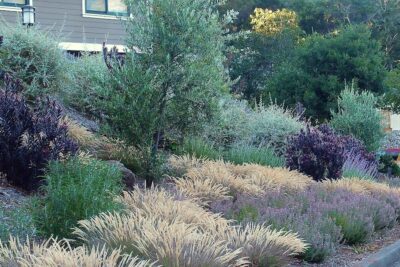
And How to Avoid Damage to Your Plants

For the last few weeks I have been working on an extensive guide to gardening in Deer Country and what gardeners can do to keep Deer from harming the garden. I am covering mostly information about California Black Tail Deer, but I also give information about other mammals (rodents) that are damaging to plants.
The EBook is available Now!
In the book I cover lots of information abouts fencing, repellents, and plants, but in this article I will talk about plants don’t usually eat. I have developed a very good list of plants that Deer avoid and have that in the book, but will also offer it as a digital download on the website, again for a pittance. Considering I have spent a lifetime developing and testing an assortment of plants that foil Deer, it will be a steal.
Anyway, in todays blog I wanted to give my readers a list of the factors that contribute to Deer avoiding certain plants. No plant is completely Deer Resistant (except maybe Rosemary!) but there are quite a few plants that are fairly safe to plant in Deer Country. Gophers are a huge problem and have a much wider range of plants they eat so always plant in wire baskets when you start new plants. That is if you have gophers in your garden.
I actually loved it when I moved from the hills down into the suburbs. No Deer or Gophers. Alas, not all my landscape design client’s lived in suburbia, so I continued to consult on Deer and Gopher Damage.
Here are a few of the things that became apparent in choosing and testing plants for gardens with Deer Present:
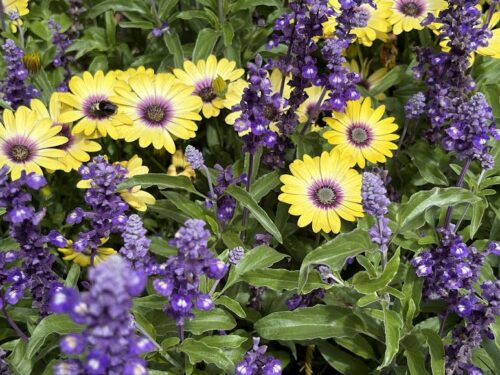
Daisies are not a Deer Favorite. This was actually a comment that a client made and upon reflection I realized that there were many plants in the Daisy Family that are not eaten by Deer. Some of my favorites are Osteospermum (pictured above), Erigeron karvinskianus (can spread), Felicia, and Euryops viridis. All of these are good in low water gardens too and tolerant a wide range of soils.
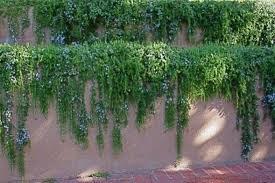
Aromatic Herbs are often left alone by Deer. I mentioned Rosemary, which may be the most avoided plant by Deer, but many other herbs are and aromatic plants i.e. Lavender, Nepeta, Salvia, Oregano and Thyme are not Deer favorites. We love them, but apparently Deer don’t! Mint and plants in the Mint Family are not usually bothered. Did you know that plants in the Mint Family have square stems? Its fun to check out the stems and see if they are square!
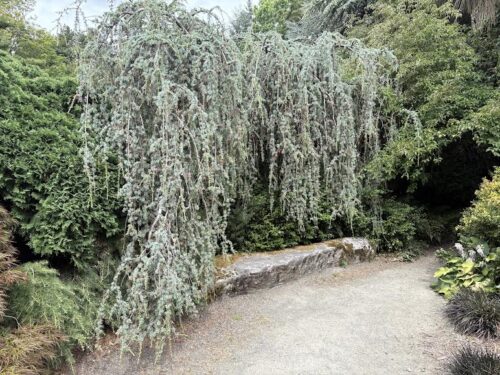
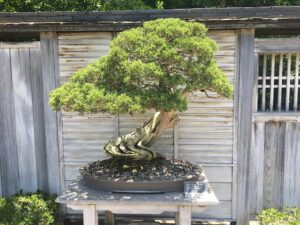
Plants with needles and scales are left untouched. Although I would protect young plants because animals have been know to bite off the tips. Cedar, Pine, Spruce and Juniper are left alone as they mature. The tough and sometimes aromatic foliage must be offensive to Deer.
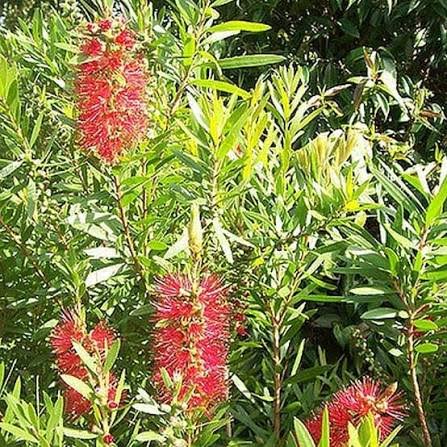
That brings us to another category- plants with tough or spiny leaves. Holly, Callistemon (pictured above), Melaleuca, and even Sago Palm or Cycads are all good examples of plants with leathery and hard to chew leaves.
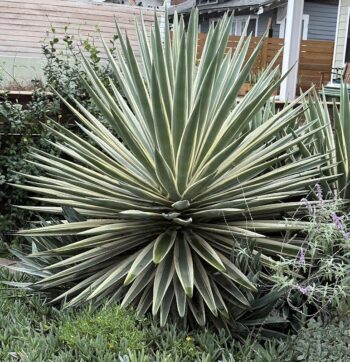
Cacti are definitely on the Deer List. A lot of succulents don’t appeal to Deer either, but occasionally they will sample the lush looking leafy kinds. I think its the fawns trying out whatever they find!
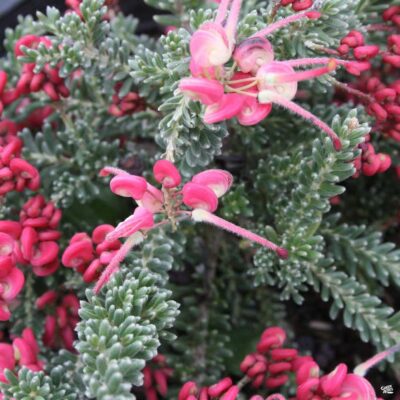
Fuzzy leaves are also not bothered by Deer. Makes sense, I don’t think I would like furry lettuce!
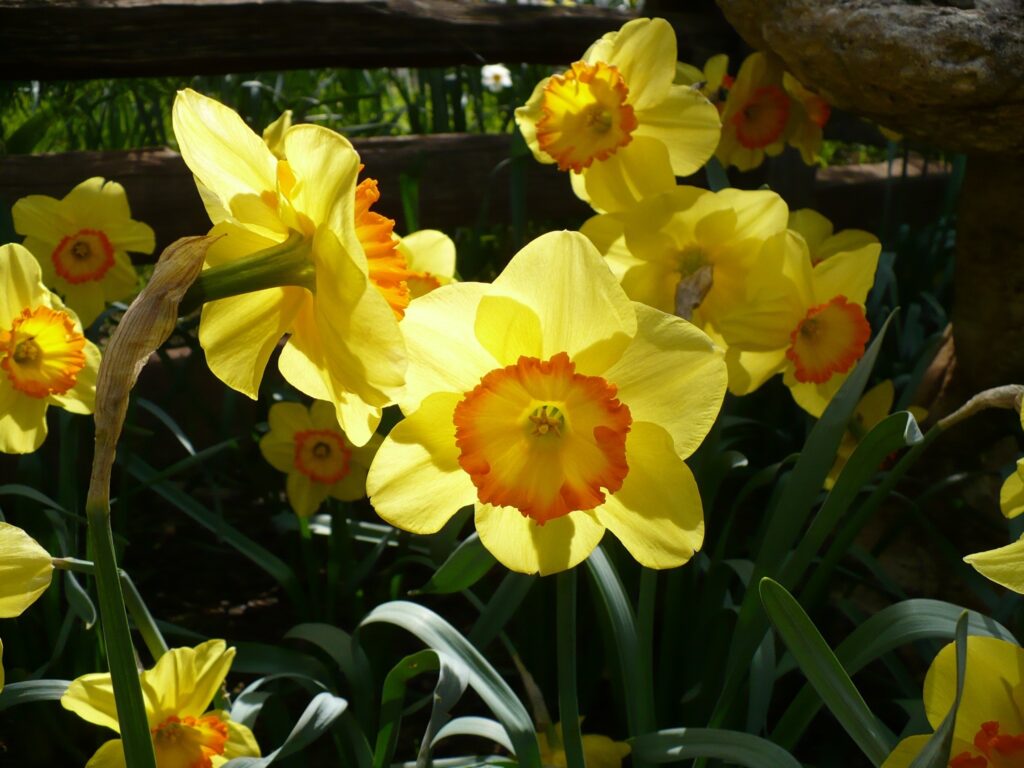
A lot of the flowering bulbs, rhizomes and corms are let alone by Deer. Narcissus, Grape Hyacinth, Snow Flake, and Iris are all good examples. Stinky Garlic plants, Onions and Alliums are also passed by.
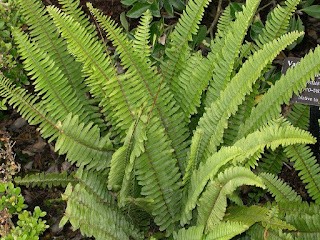
Ferns are pretty safe in Deer Country, they don’t seem to be on the buffet.
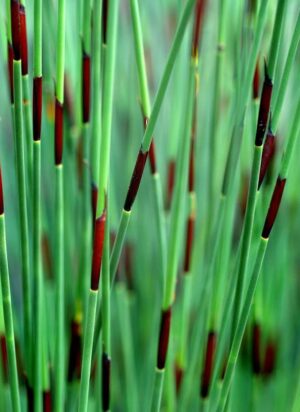
Rushes, Grasses and Sedges are not huge Deer favorites. They tend to be tough to chew and have strings in them.
Lastly, you would think poisonous plants would be a safe bet. Not always though. While Oleander is highly toxic I have had the Deer or Gophers munch on them. Same with Laburnum- Golden Chain Tree, the Deer ate off all the leaves in their path even though it is deadly. Sometimes its a fluke or those Fawns not knowing what will make them sick, but its best to check a good Deer list before going along on a general premise.