Through my years of designing landscaping in the S.F. Bay Areas of California, I thought I understood and was very familiar with the blooming shrub, Hydrangea. I certainly specified the use of these plants plenty of times!
Boy was I wrong. Once I retired and started traveling around the U.S. visiting Botanical and Public Gardens along the way, a whole new world of Hydrangeas opened up to me.
In California, Hydrangeas bear the heat and even the dry conditions of central and southern regions well. Once established these are tough plants that are most commonly used along the foundations of peoples homes. They grow to about 3-4′ and equally as wide. I think of them as having light to medium green leaves. California soils are typically heavy in clay and can be alkaline as well.
A trip up to Seattle, Washington changed my view of what Hydrangeas look like when they are thriving. These huge beauties dwarfed my 5’8″ height and were covered with both huge flowers, but also large, deep green leaves. Wow! I had the happy place for these plants. Here are a few photos from Kubota Japanese Garden in Seattle
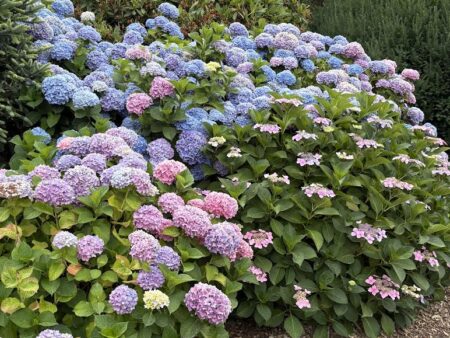
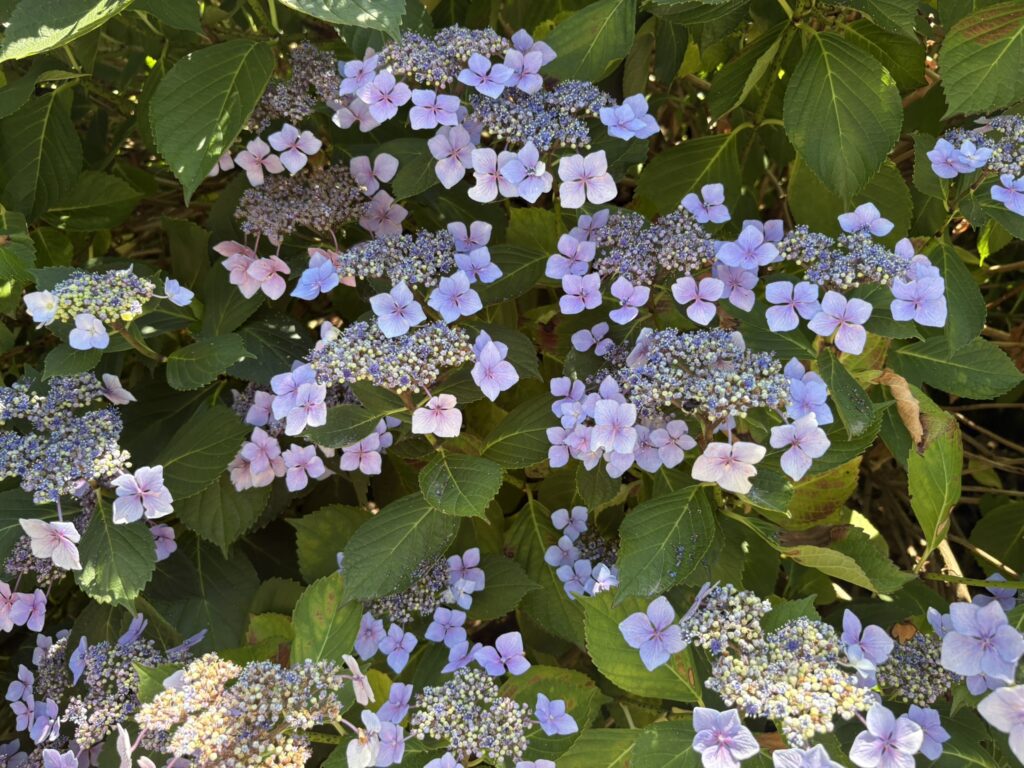
The large flowering shrubs are most know for their “Mophead” type flowers which are a big round ball. The lesser know is the “Lace Cap” type with some sterile flowers at the center that don’t open. The colors vary from white through pink and blue shades. The common hydrangea flower is affected by the soil pH and has pink flowers in acidic soil and blue colors in lime soils. The newer hybrids are true to one color and there are added colors from lavender with white up to deep crimson.
Hydrangeas are easy to dry, allowing you to keep your bouquet for an extended period time. Use a small amount of water in the base of the vase and let it evaporate off. The flowers will dry on their own. When they get dusty, use a blow dryer on a low setting to dust them off. Remove the leaves before putting them in the vase.
Hydrangea flowers change color as they age. They will start in a true color and lighten then fade to greenish as they dry.
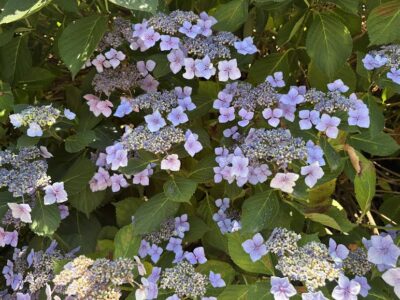
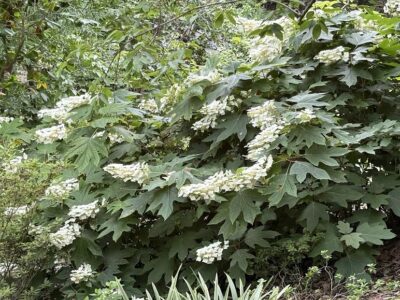
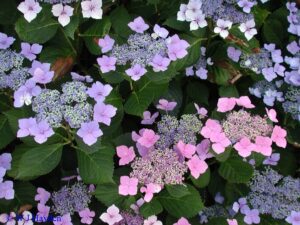
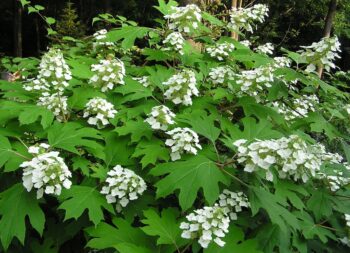
Oakleaf Hydrangeas are a great plant to use in landscaping. The leaves as well as the flowers are beautifully shaped. They tend to be more resilient than the common Hydrangea, adapting to moderate water and a wide range of light. All Hydrangeas prefer morning sun and shade in the afternoon. They also work well in a woodland setting with dappled or light shade. All hydrangeas need watering. Their big, lush leaves will droop without it!
Hydrangeas are a very widespread plant. They are deciduous in the winter so can handle frost and freeze regions and can take hot summers with plenty of water. I was happy to see them growing in El Salvador when I visited the gardens there. They like the humidity and summer rain but The leaves yellow with a poor soils.
It is best to give them a pruning as you would a Rose. Cutting the stems back to within 2′ of the ground. I usually wait until the buds begin to swell in the early Spring, to see which stems are still viable or alive and then I prune to the healthiest looking buds.
Cut the dead flower heads off to keep the plants looking fresh and to encourage further blooming. Hydrangeas are excellent cut flowers and last a long time. Actually, one flower is a whole bouquet!
Fertilize with a organic or inorganic fertilizer labeled for flowering shrubs twice a year- in Spring and Fall.
When planting add plenty of organic compost and good quality soil conditioner to the planting backfill. Dig a hole twice as wide as the root ball and same depth as the pot it came out of. When planting make sure the top of the root ball is even with the ground level. pack down soil around the root ball. Use a 2-3″ layer of shredded bark mulch around the base of the plant. Pull the mulch 2-3″ away from the plants trunk. Soak the planting hole before planting and after planting.
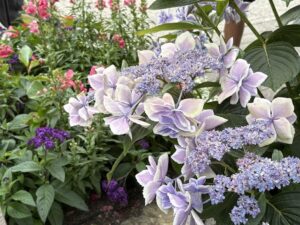
Here are a few interesting variations of Hydrangeas. Some are rare hybrids like the double Dutch type.
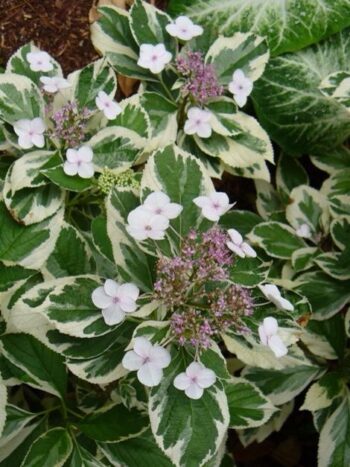
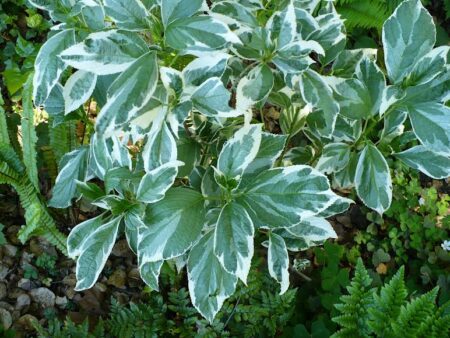
These are Variegated Hydrangea- both the leaves and the flowers have white on them lightening up a shaded area.
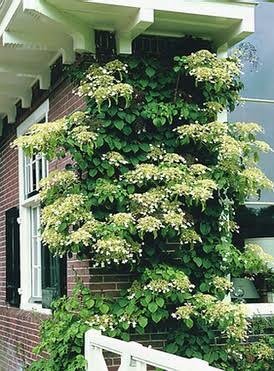
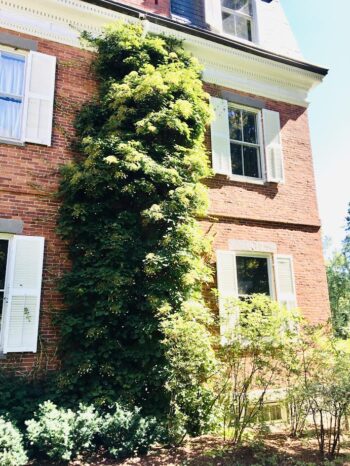
These are some very healthy Climbing Hydrangeas. The one on the house face is in Vermont at an old estate, so it is quite old to reach the top of the second story!
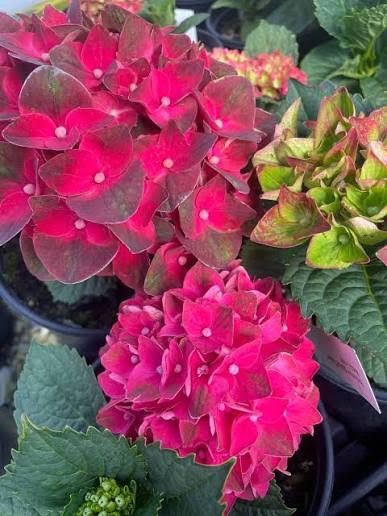
A rare color of Hydrangea, but there is now a good group of crimson and dark red Hydrangeas.
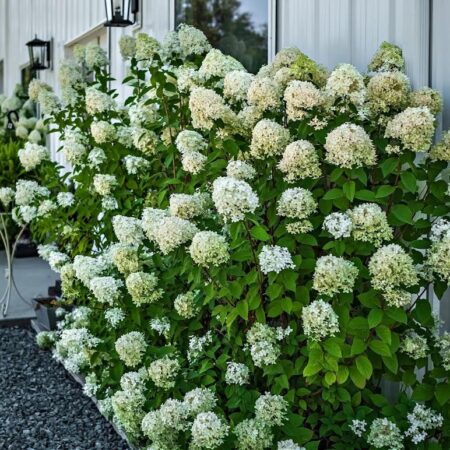
The Pee Gee Hydrangea isn’t rare but is rarely grown in dry, hot summer areas, so we didn’t grow it in California much. It is more common on the East Coast and in England.
They have a cone shaped flower like the Oakleaf Hydrangeas.
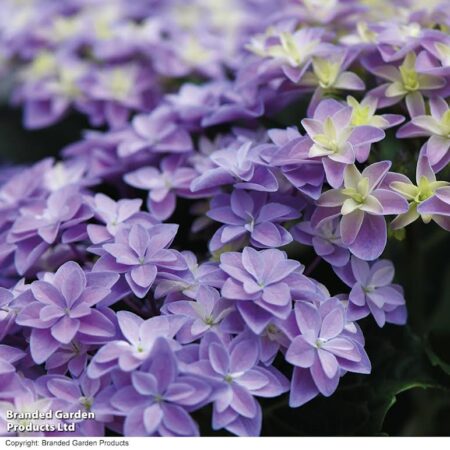
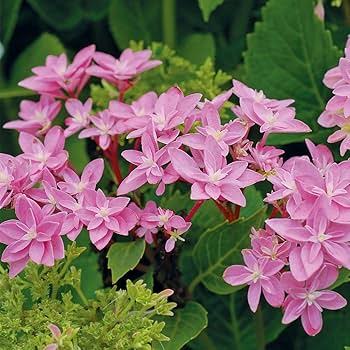
The pink is Double Dutch Elam and the lavender is Double Dutch Alkmar.
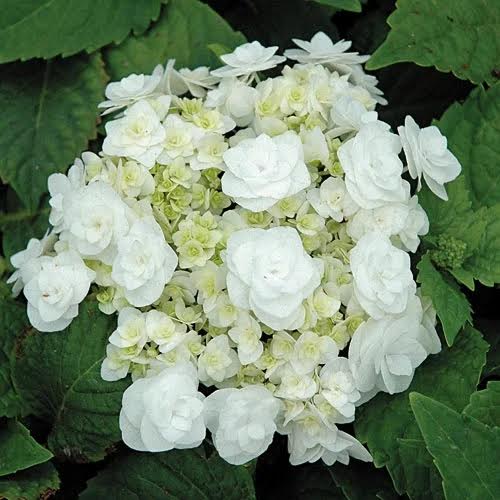
Here is a sensational hybrid called bridal veil. It has both cream and white double flowers.
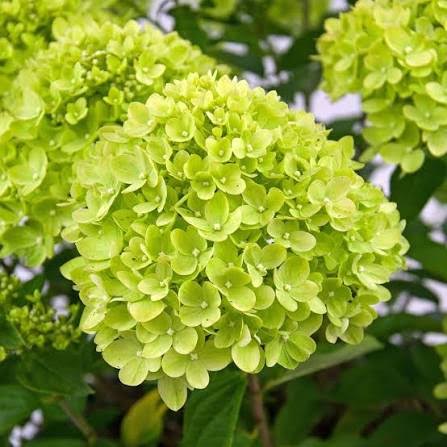
Lastly, a lime flowered Hydrangea. This one would be gorgeous combined with deep blue and purple flowers. it may not show up in the garden very well, but is a super cut flower.
When considering flowering shrubs, there are just a few iconic choices that really stand out: Lilac, Rose, Hydrangea, Rhododendron and Camellia . I’m speaking of both the perspective of the shrub in the garden and as a cut flower. Peony could also be in this group but is a perennial rather than a woody shrub.
These are also shrubs that are a common staple in large, estate gardens with big areas for these plants. Most Botanical Gardens have whole sections devoted to the many varieties of the famous of the different flowering shrubs.
Lots of typical home gardens have them as well, just not in the number and size that estate gardens have. I mention this as reminder to remember their eventual size when considering having flowering shrubs in your garden. I guess I have seen one too many sheared Camellias! Nothing sadder than a gorgeous plant reduced to a cone, ball or rectangle.
I know you have seen lots of Hydrangeas in gardens and I hope this article will give you the information you need when considering planting them.
Please give feedback, comments or just share a photo. I invite everyone to participate in this gardening voyage.