Part 4
Using Color Combinations in the garden
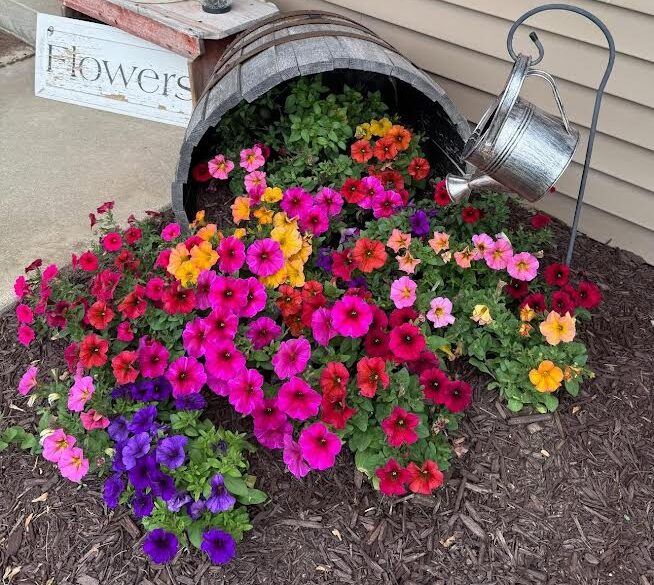
Using colors, like many things in design, is a matter of personal taste. You may love to have all the colors of the rainbow plus more in your home and garden. This is your choice and reflects how you view the world and the environments you live in but, most people have a definite preference in the colors they like and are comfortable with. Others don’t like to have much color mix in their home and garden and prefer neutral tones. All of these choices are perfectly fine and are part of the freedom of choice we have.
As a landscape designer, my role is to assist in providing information and options that are available, to help you make appealing and well thought out decisions. That is a big part of planning a garden or decorating your home. These blogs on color provide a framework and examples of color palettes and how they look together. This has been a very happy and exciting project for me. Given my background and life’s work obviously I love both color and flowers! To write about color using flowers to illustrate the different shades and tones, then send the blogs out on the world wide web is a perfect project for me!
Having said that, flowers are just one of the colorful elements in the garden. I touched upon the different shades of green but, now lets delve a little deeper into other leaf colors and elements that add color to the garden.
Flowers are lovely and play an important part in any type of garden but, they can be fleeting so having other items in the garden that provide color either year-round or at particular times of the year can be helpful. Also landscaping, as opposed to flower gardens, tends to be more static than a garden tended by a talented and loving gardener constantly.
Leaves
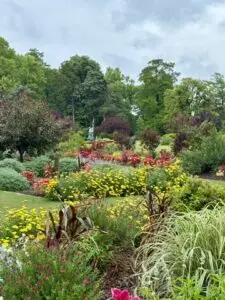
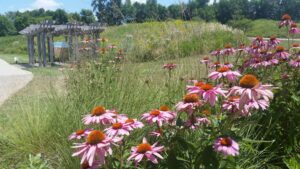
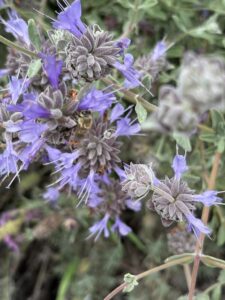
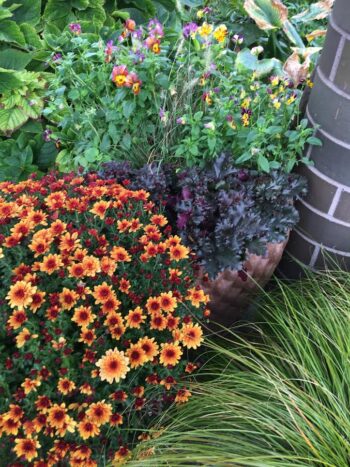
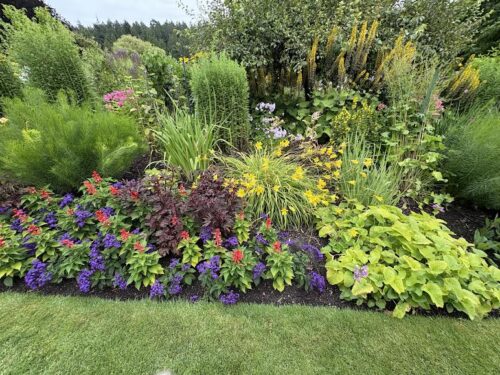
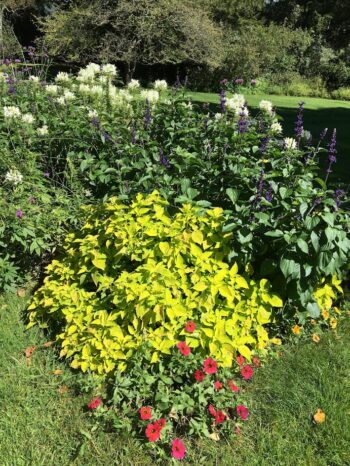
For now I will discuss foliage colors but, leaves also add different textures and patterns to the garden. In nature plants vary in the shades of green they have but, the shades of greens dramatically increases when the hybridized and cultivars of nursery grown plants are added. Leaf colors vary all the way from silver or gray green, to chartreuse and to very deep green. Nurseryman have also developed lots of special hybrids with multi colored leaves. When using these shades of green and colors it is helpful to remember the complimentary and contrast colors that blend well. In the pictures above the purple leafed plants and blue flowers are contrasted beautifully with the orange and yellow flowers. The green leaves also add a complimentary color to both. Chartreuse leaves combine well with purple flowers and leaves plus other shades of green.
Here is a gallery with lots of photos of different foliage colors, and with some labels and captions to help explain their qualities.
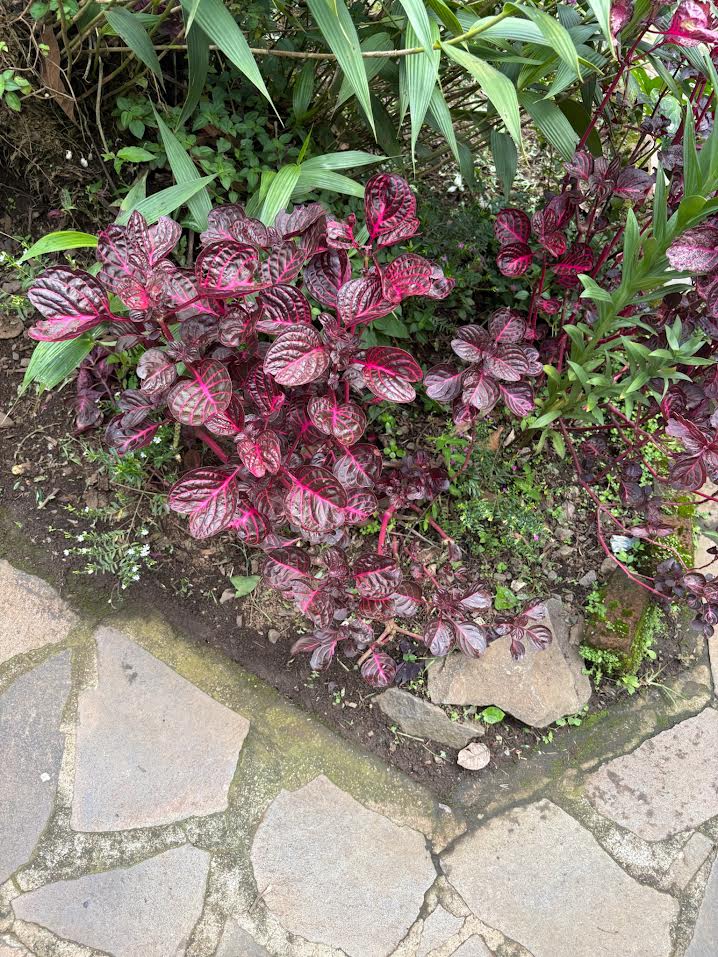

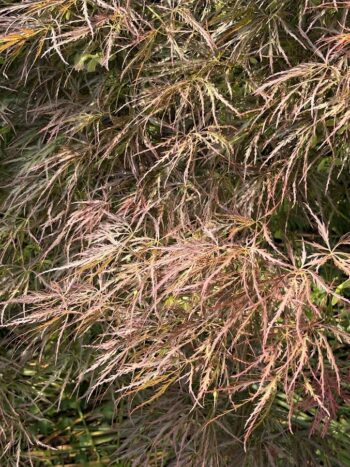
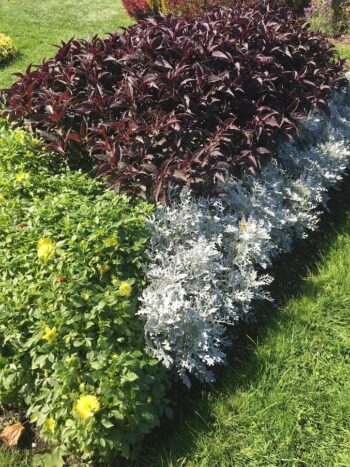
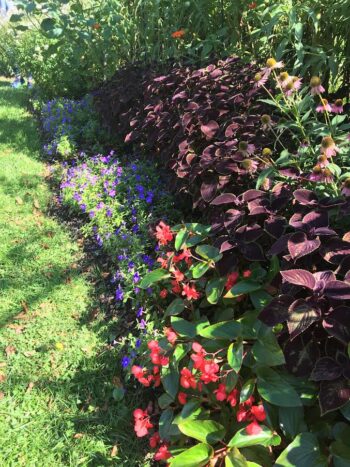
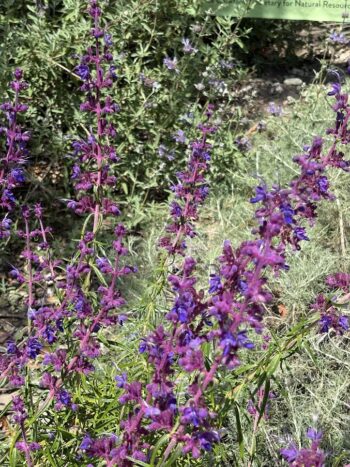
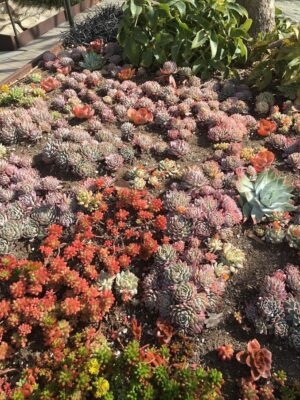
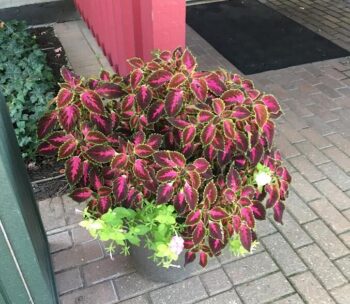
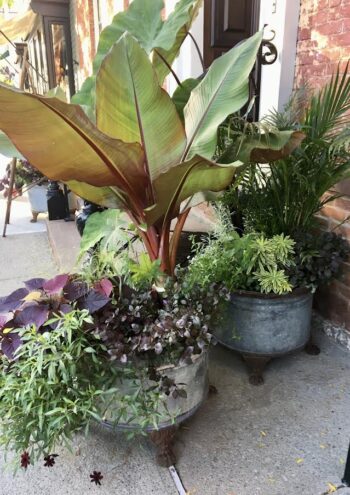
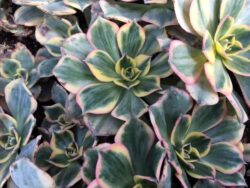
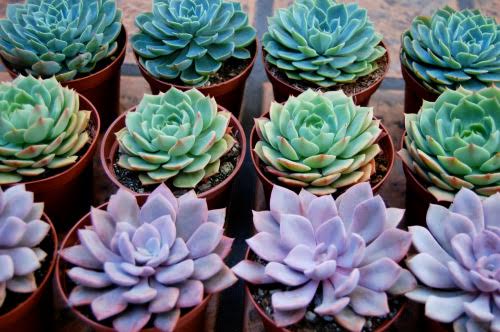
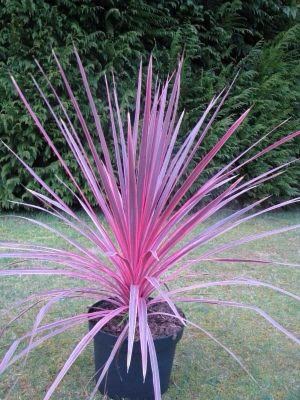
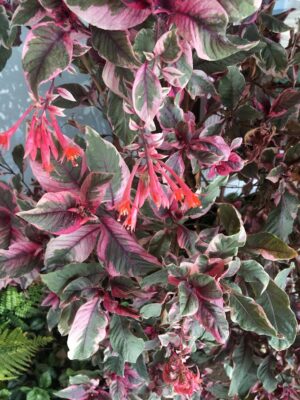
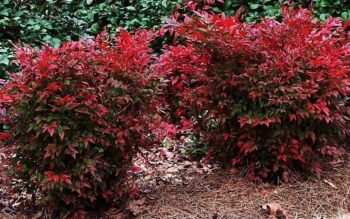
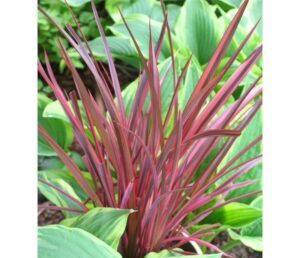
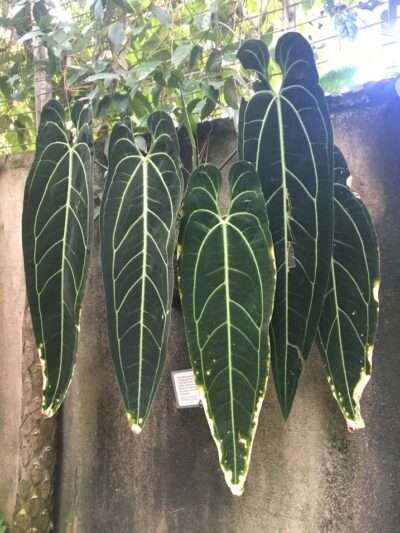
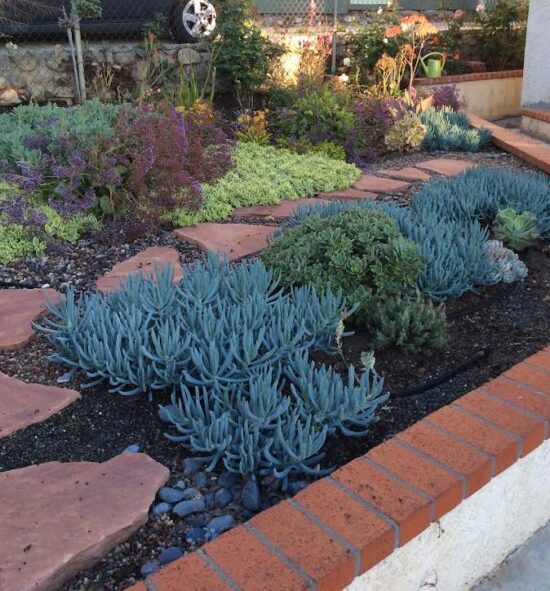
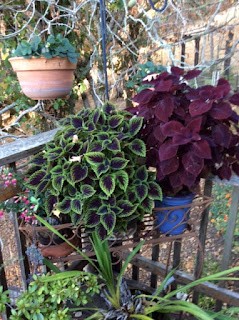
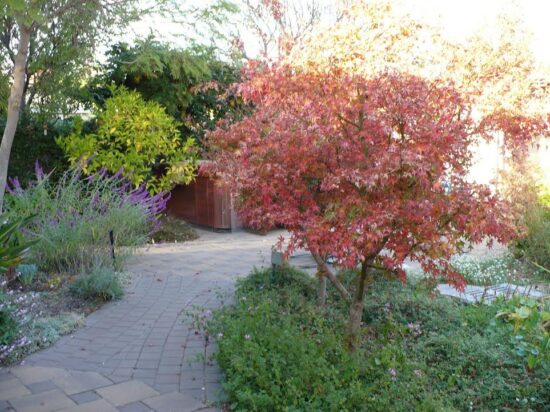
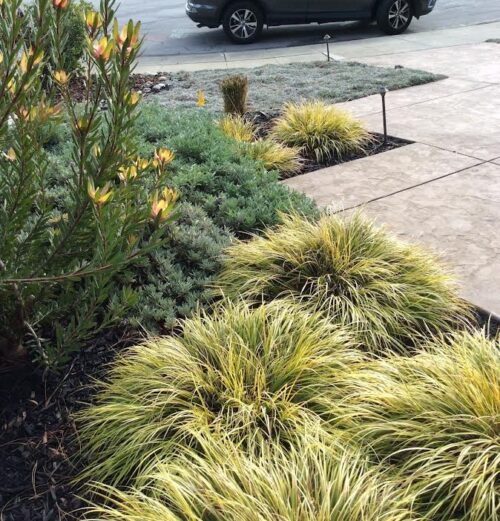
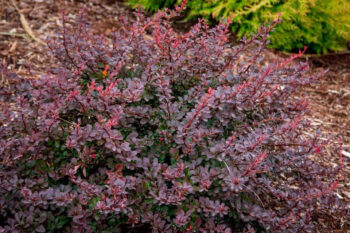
While flowers bloom the best in spring, plants with interesting foliage or a foliage color can be a highlight in the garden year round. Variegated leaves can be green with white or yellow margins or the opposite with green edge and white or yellow center. Red foliage tends to be most intense with the new growth and some plants intensify in color in the cold weather. Variegated plants and plants with red or purple leaves will burn more easily than their green leaved parents, so water well and keep out of extreme afternoon sun.
Combining foliage colors works just as well in pots as in garden beds. Blue, purple and White flowers work well with all of these red, purple and variegated leaves. Yellow can be interesting with purple leaves and flowers as the contrast color.
I also have a blog about textures and patterns in the landscape. Leaf shapes, interesting bark and shade patterns are explored there. Here is a link:
Fruit and Berries
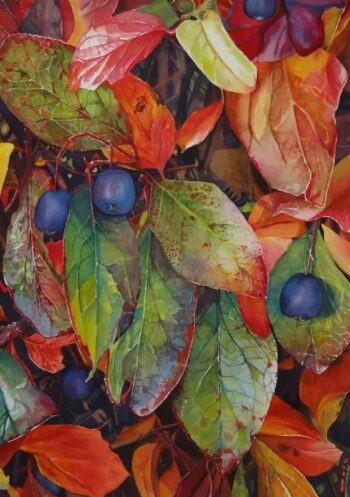
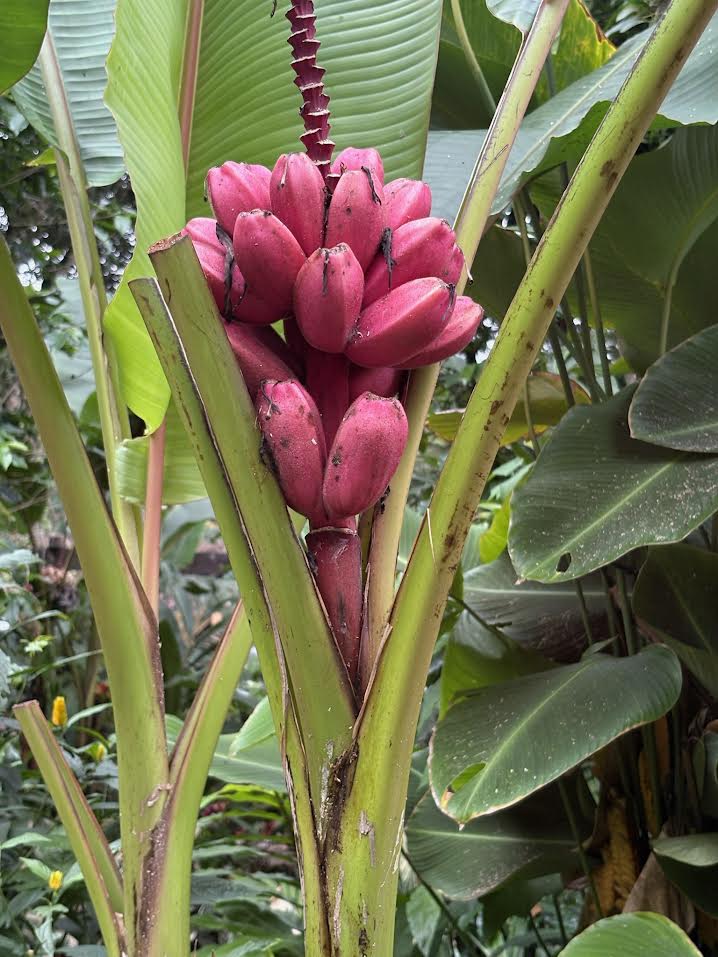
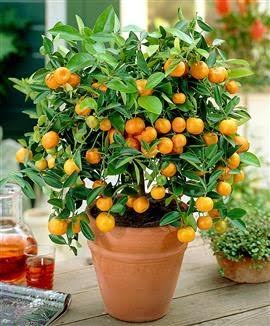
Colorful berries, fruit and seed capsules can add another color element in the garden. Plus you get to eat some of the color! Citrus is a great to have in any temperate garden. Adding colorful and useful fruit that stores well on the tree and ripens in the late Fall and Winter. Small fruit can be an important food source for birds coming into the garden. Migrating birds will often come by to find nectar and food for their long trips. Pick all the fruit each year to encourage health in the plants, have less insect and disease issues and discourage rodents.
Autumn Color
The change of leaf color in Autumn and the bright colors of new leaves in the Spring also signal changes in the garden and add beautiful shades of orange, yellow, and red. Deciduous trees and shrubs plus some vines can have the color change when the temperatures cool. Its amazing how different the garden looks in winter when you have a lot of deciduous plants. The whole garden opens up and takes on a new look.
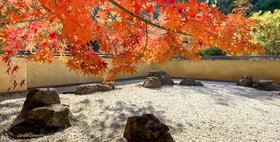
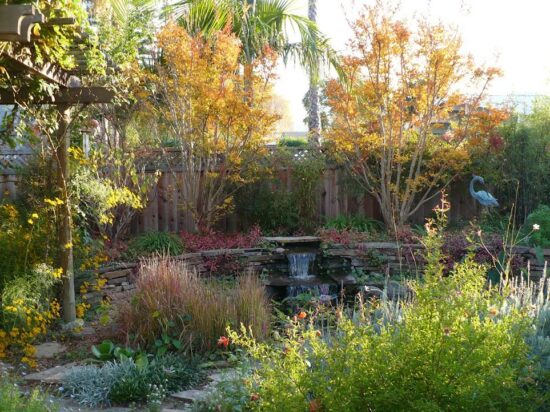
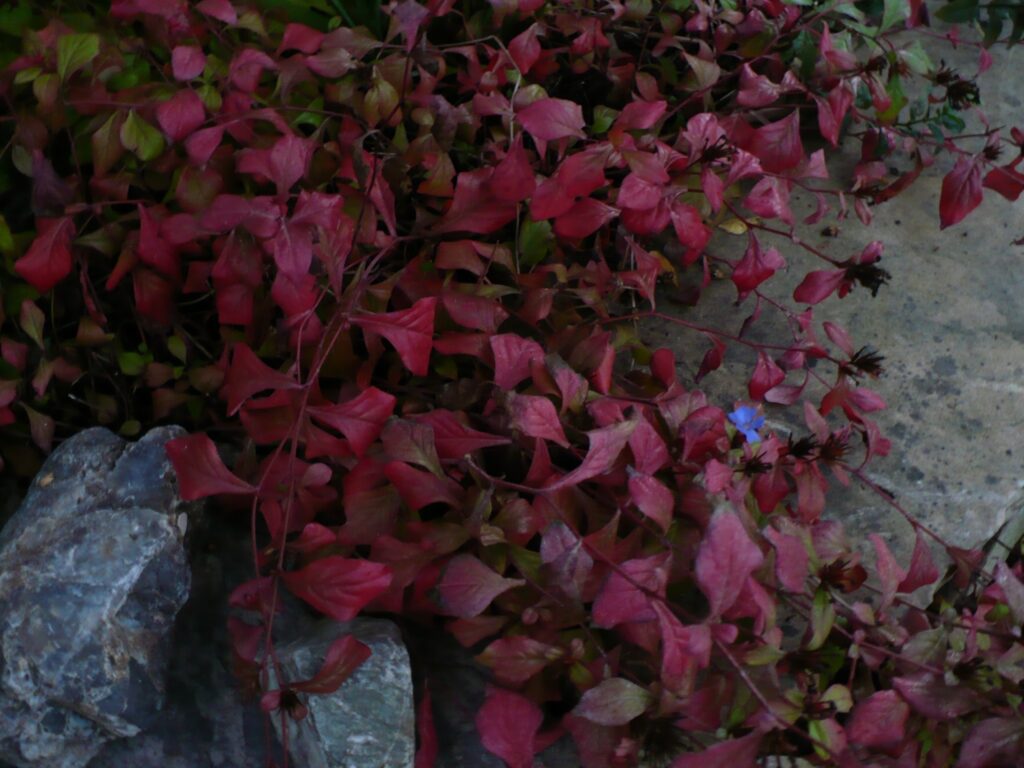
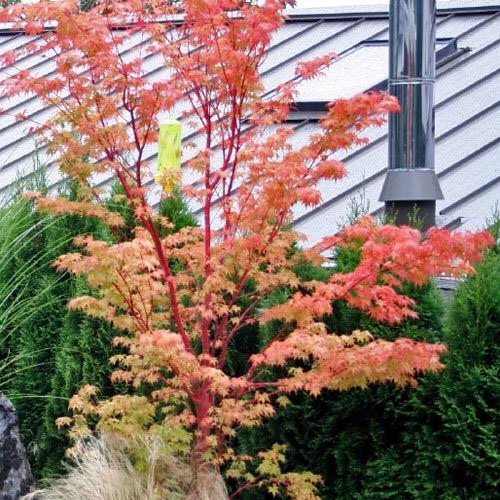
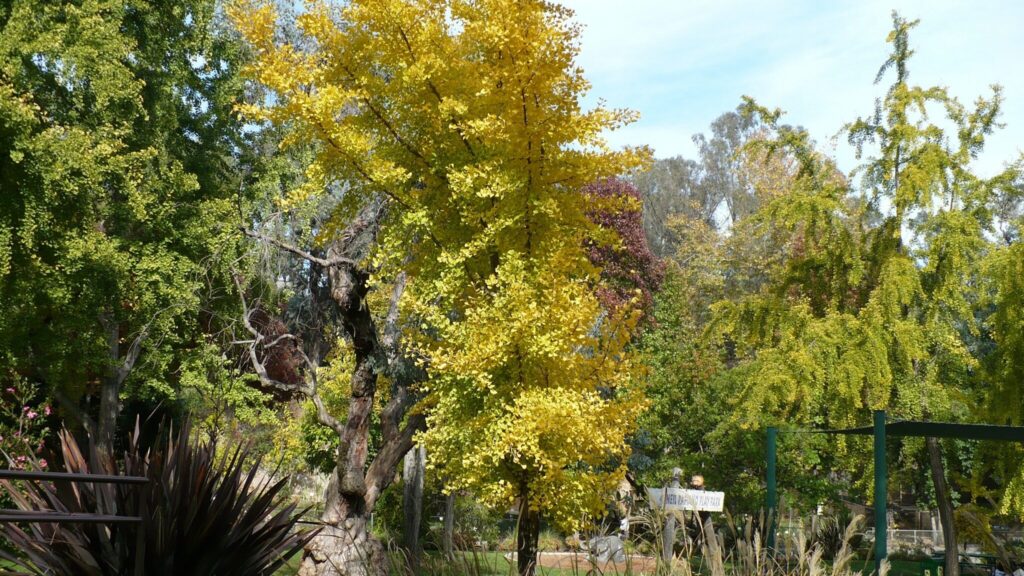
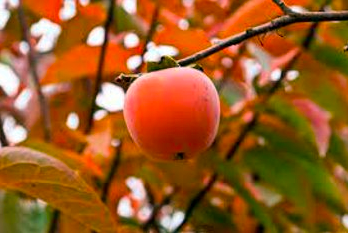
The photos above from top left show Japanese Maple with Fall color, in center are Crape Myrtles turning color behind the pond, Ceratostigma- Burmese plumbago has lovely red Fall color contrasting with the blue flowers, Red Bark Japanese Maple with new leaves, Ginkgo with brilliant yellow Fall color and Persimmon with both colorful fruit and Fall color.
Considerations When Planning a Garden and Incorporating Color
Along with flower color consider using some of the following; plants with colorful leaves, maybe a few fruiting trees or shrubs, and a deciduous tree or plant that turns color in Fall can give interesting focal points at different times of the year, and bring change to an otherwise green landscape. Some of the Deciduous Trees that fruit also have blossoms in the Spring like Pear and Cherry making them a nice addition to any garden.
Now that you have looked through the information and photos in the color blogs, what are your favorite colors that you might like to use in your garden?
I have used just a few examples of flowers and plants, but there are more photos on my Gallery page (click button below) and in the blogs. Your local Nursery or Botanical Garden will have lots of options too. Looking at gardens in your neighborhood is a good way to see plants that might work.
Now that Iphones have an ID feature for plants when you take a photo, finding the names is a lot easier. You can also take a sample to the nursery, if you are not sure of the name. Once you have a color palette you want to incorporate then do some research on plants that grow well in your area, are easy to grow and use a similar amount of water, This will help you narrow down the options.
Also consider annual vs. perennial, Annual plants live out their whole life cycle in one or two seasons i.e. petunias, marigolds, zinnias, sunflowers, pansies, impatiens etc…..Annuals are useful to add a pop of color in planting beds at different times of the year.
Once they are established perennials grow for many years. Consider planting bulbs in the Fall so they will come up in the Winter and Early Spring. They are easy and don’t require extra irrigation. Examples of bulbs to use are Grape Hyacinth, Daffodils or Narcissus, Dutch Iris, Tulips and Freesias.
With trees and shrubs, it’s most important to understand their full expected size and respect that information. It’s hard to believe that a small single trunked plant you bought in a 1 gallon pot will become a 30′ tall tree but, that is part of nature. Trees will grow to be large and thrive in no time at all.
Examples of a variety of Garden Designs
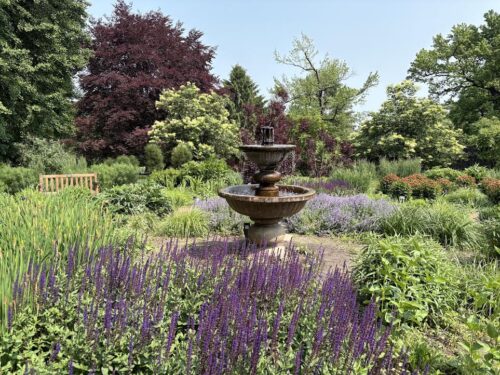
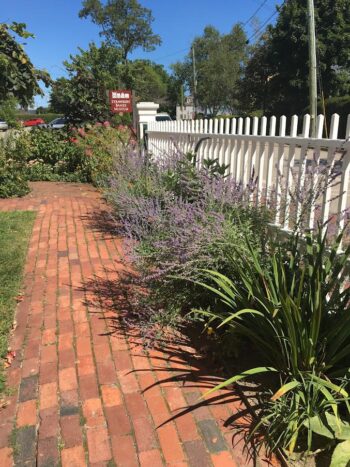
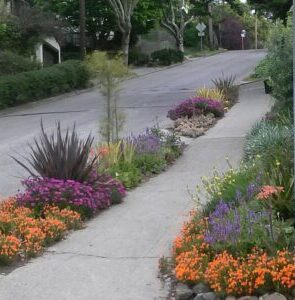
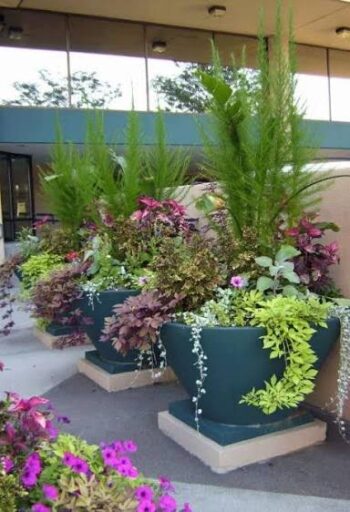
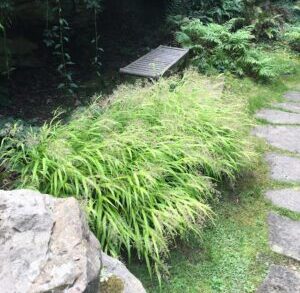
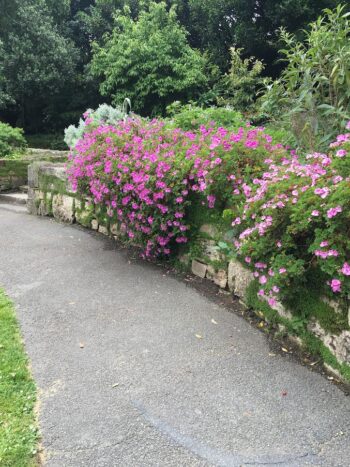
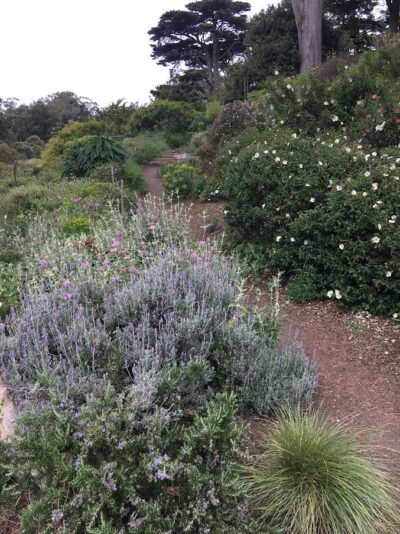
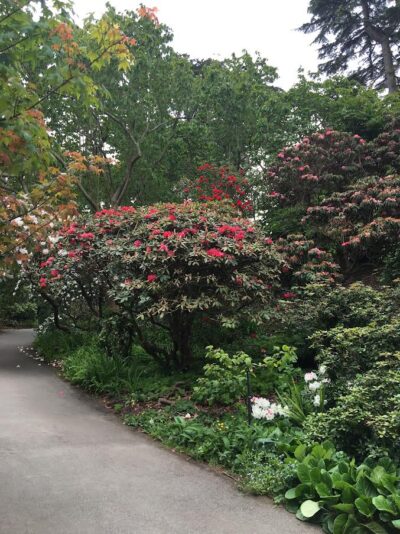
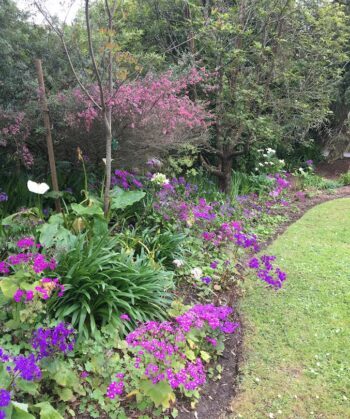
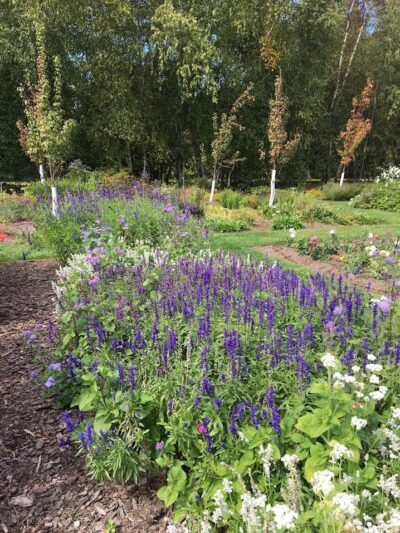
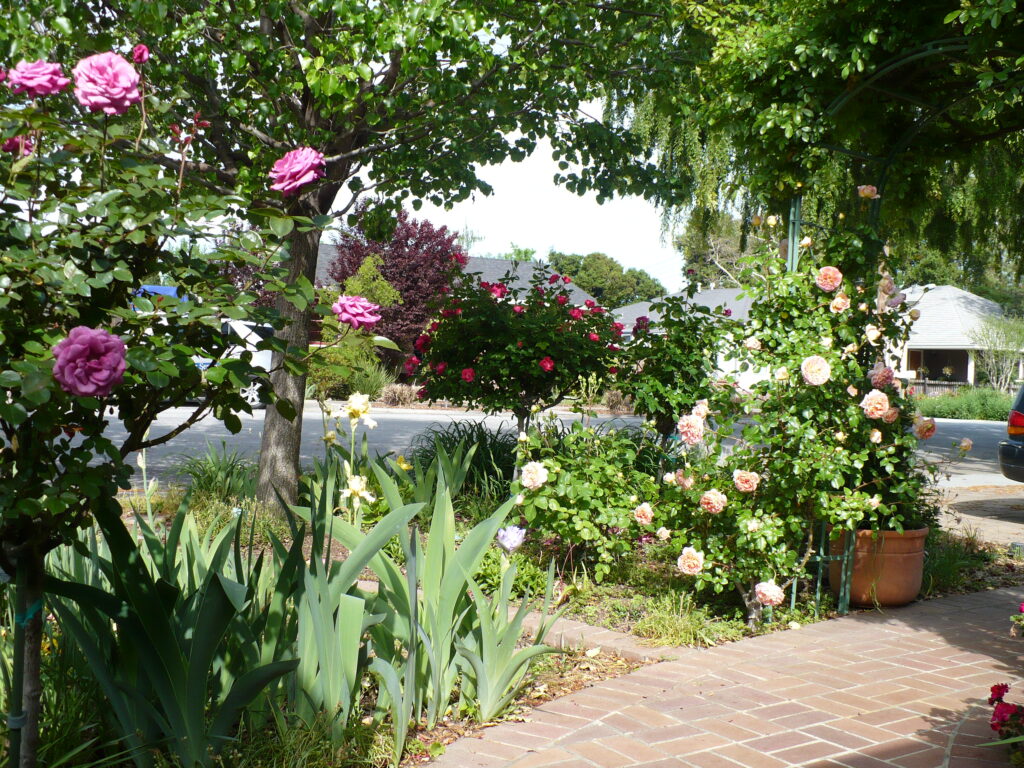
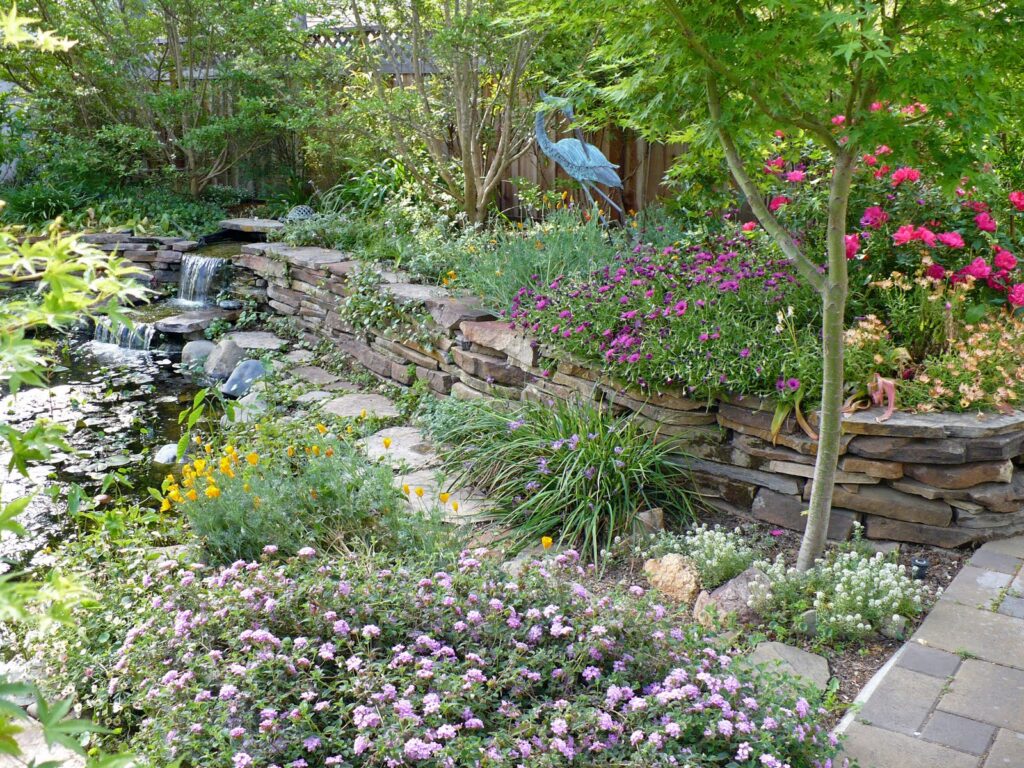
Here are a few examples of gardens with a variety of designs. Many incorporating flower, foliage color plus a variety of green tones.

Garden Art
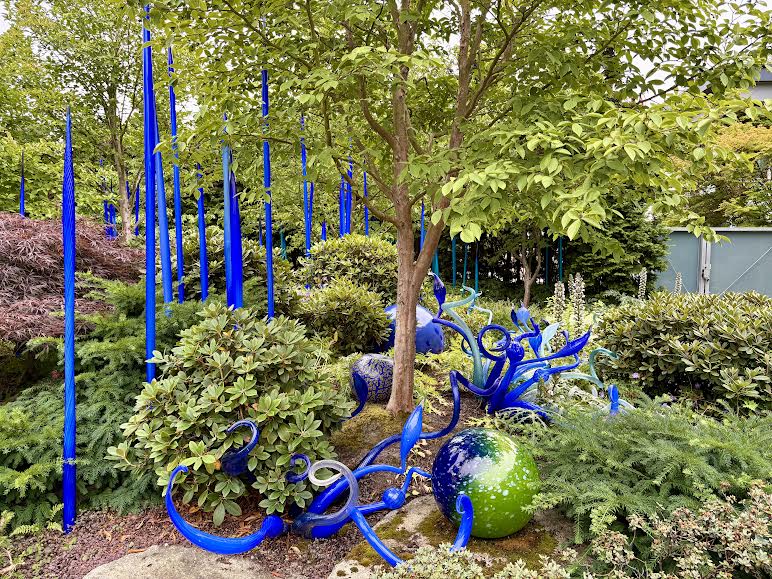
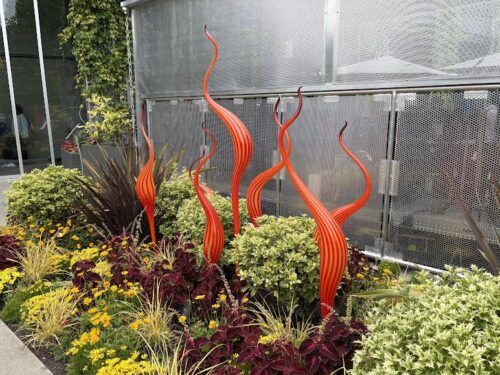
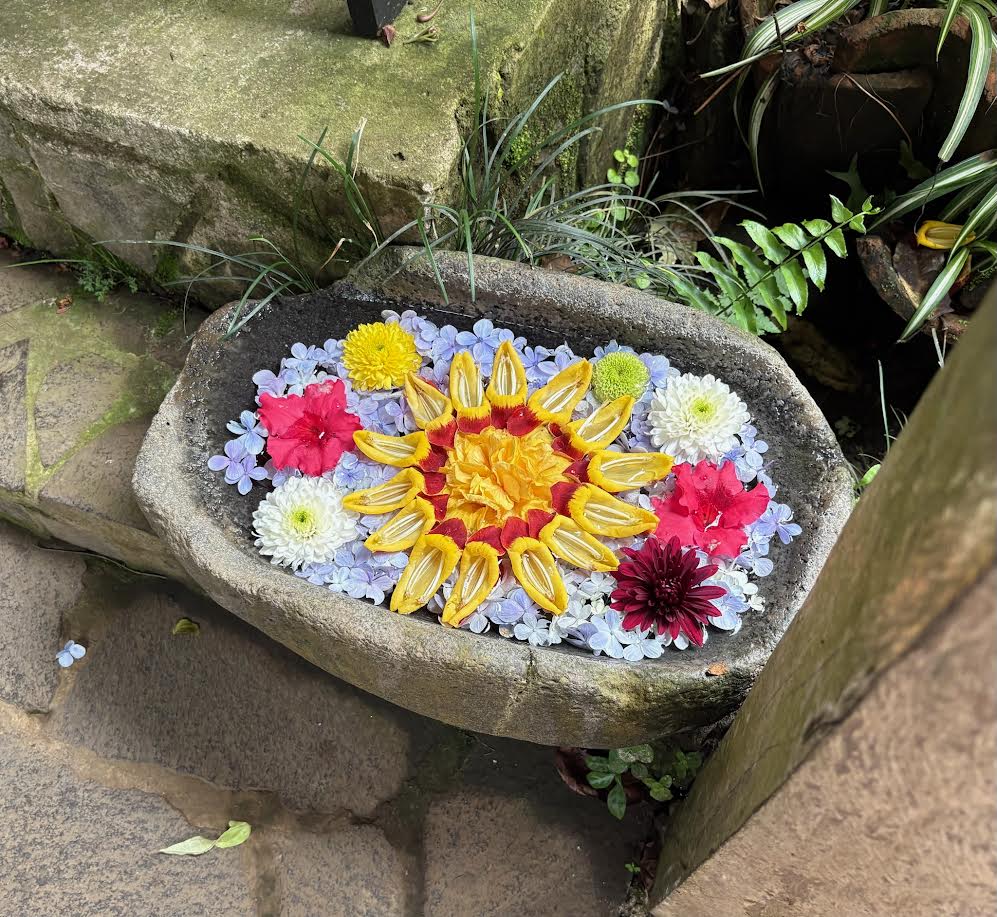
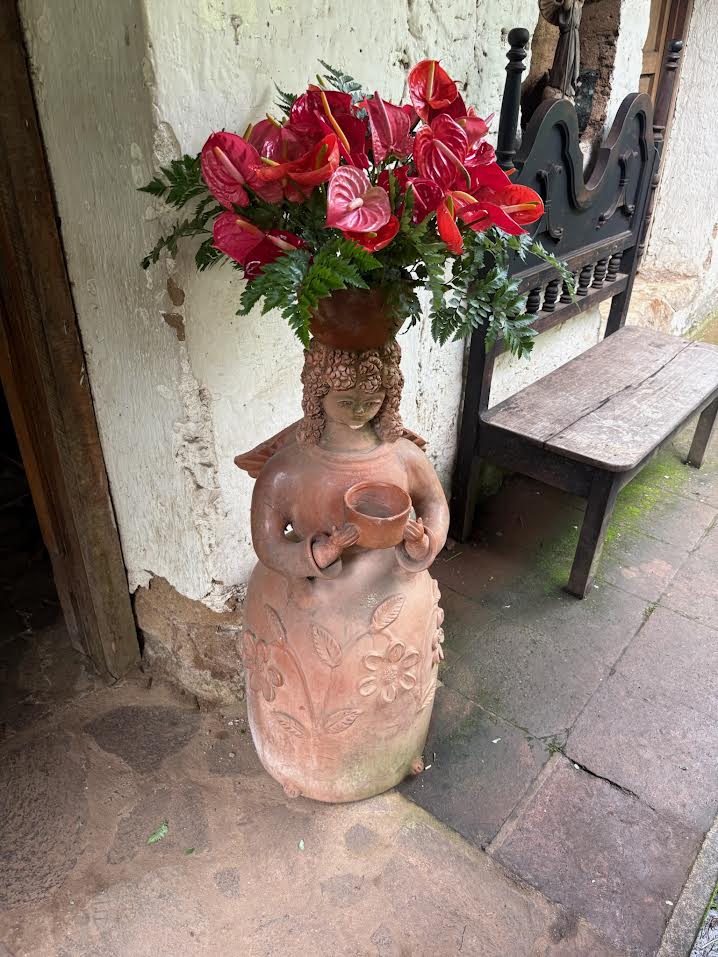
Not everyone can have a Chihuly glass sculpture in their garden but, there are lots of low cost versions of garden art that can add a color spot. Bright color pots with or without plants are an easy add and wall art can really dress up a boring house wall. My grand-daughters and I did a fun mosaic project making a stoop for the garden shed. We kept it simple and each added our own style. I did the flower, of course. In my Mom’s garden we built a garden fence and gate and inserted this stained glass window. It was left from our old store and had been in the basement for probably 20 years. Upcycling old stuff is a fun, and ecological way to find a few pieces of garden art. I loved these old grinding bowls in El Salvador, which had flowers artistically arranged, floating in them. I saw this terra cotta maiden there too with a bouquet of Antheriums. In El Salvador they call them “Heart of China”.
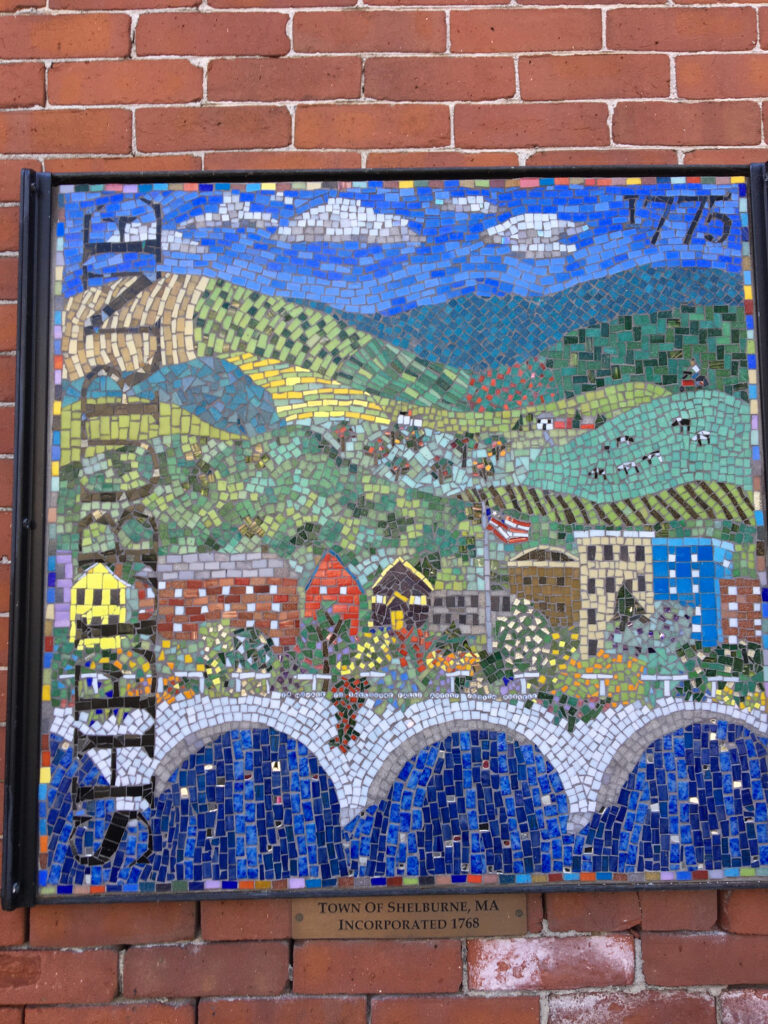
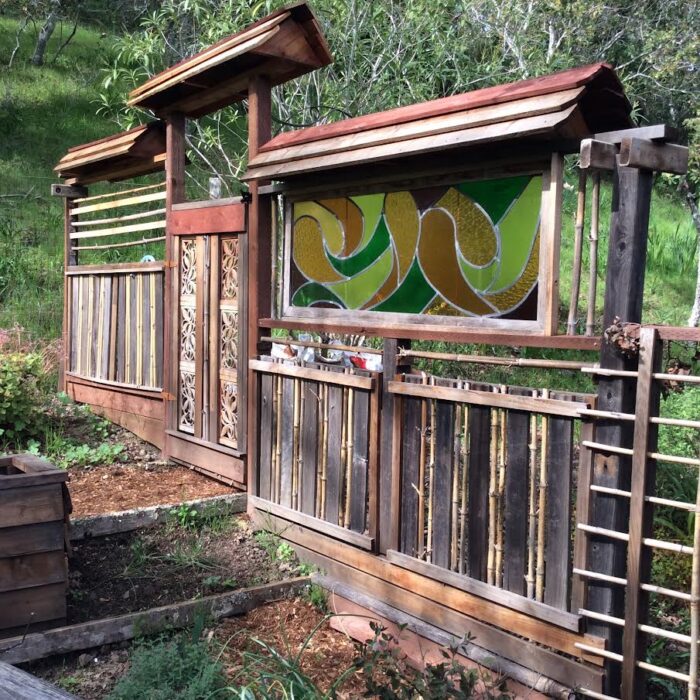
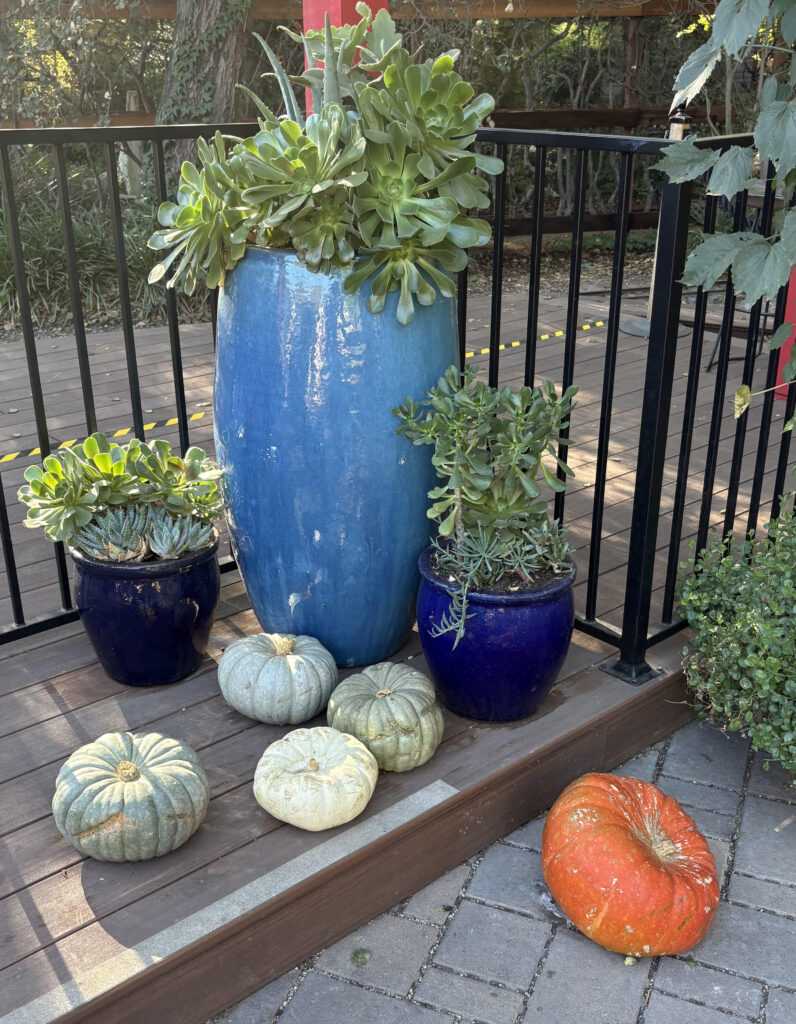
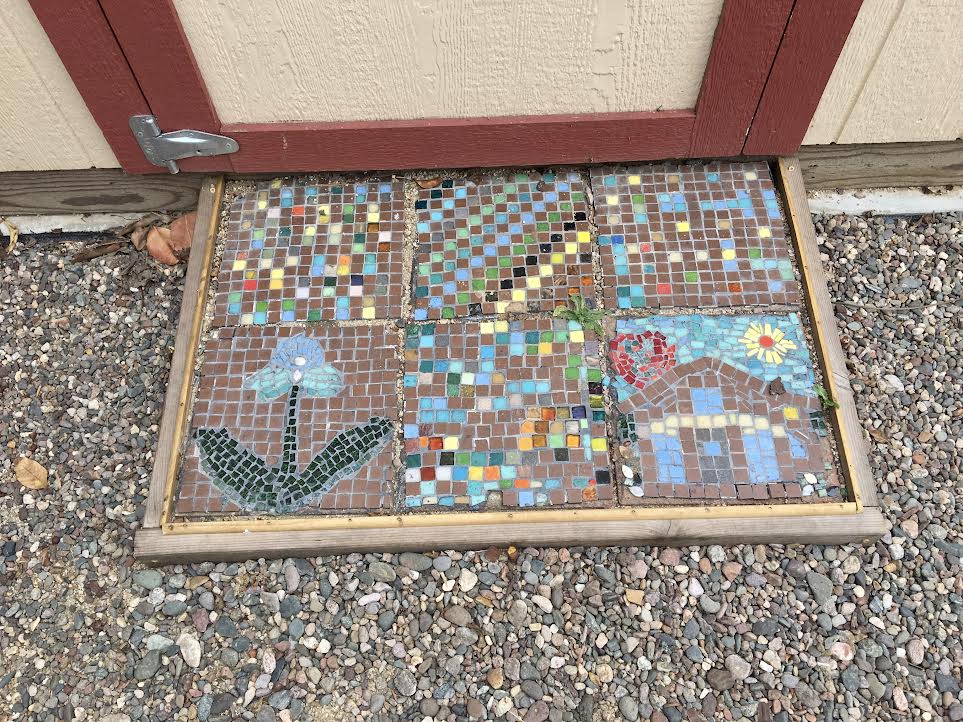
I hope you have enjoyed this blog series on Color and its use in the garden. For the most part colors combine well especially since green leaves act as a “moderator”. The place that I often see colors clashing are in Rose Gardens where no thought has been given to how the colors of the Roses work together. It would be better if the beds were organized by colors of similar shades rather than haphazardly. I only comment on this as an example of poor color use. The other common problem in landscapes and gardens is the lack of any color at all. Lawn and Gardener Services help out by shearing off the flowers of most plants. Good grief.


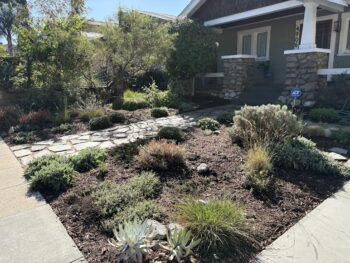
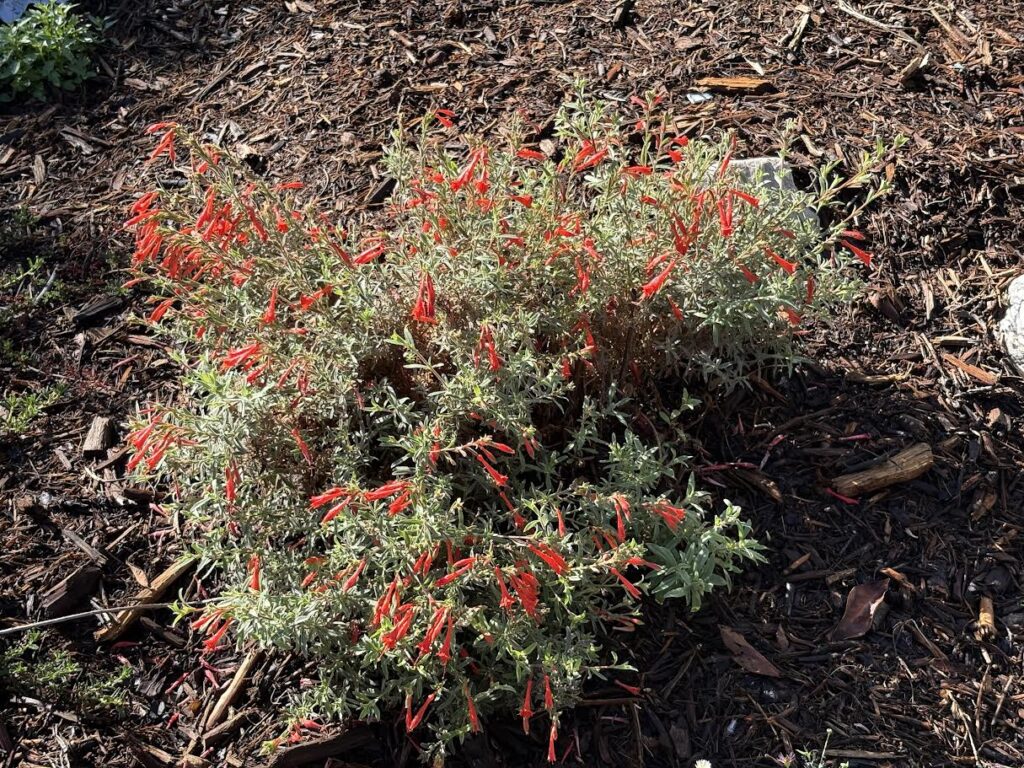
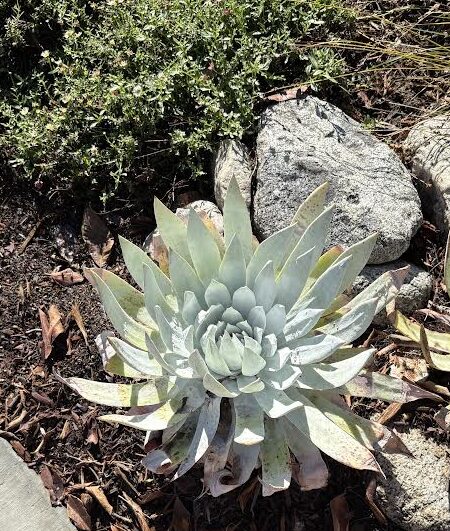
The house without landscaping, shown above, is one I pass a lot on my morning walk. It actually hurts to see this blank garden and bland paint job as I walk by. Right next door is the opposite. These folks tried hard to make an interesting drought tolerant garden in front of their cool Craftsman house. They have some interesting plants like the Dudleya and California Fuchsia shown in the photos. The garden looks a little scruffy this time of year (Fall), but will fill in to be lovely in the Spring. Just one example of how landscaping can add some interest and a finished look to the front entry of a home.
I hope these article will help you will find ways to have a good display of color throughout the year so you can enjoy the vitality that comes with it.