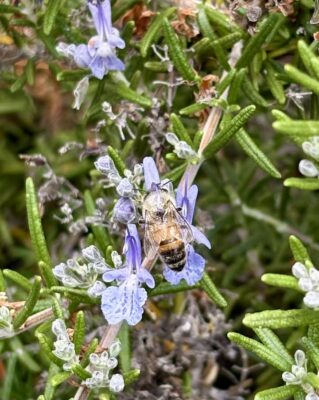
Bees and Pollinators in general are on my mind right now. National Geographic recently had an issue that studied the intelligence and problem solving of Bees. For a creature with a tiny brain, they have an incredible range of abilities. Keeping track flowers they have already visited, knowing the best areas for higher pollen forage, and mapping the fastest and most efficient routes- amazing! Honey Bees have a resourcefulness that is astounding.
Bee keepers are familiar with the personalities of bees and of overall hives. And I have always been a proponent of the gentleness of bees, having gardened literally eye to eye with them for so many years.
Of course, Honey Bees are not the only pollinators. Native bees, moths, butterflies, flies, some birds and even bats are among the many creatures that pollinate flowers. For our crops though, the European Honey Bee is still the most efficient and common pollinator. Moving hives from field to field and orchard to orchard ensures that crops will get pollinated.
New twist in the news this year, honey bee hives are dying. Not from colony collapse this time, but from lack of enough forage to support the hives. That is the theory anyway. This makes me pretty mad. When you see farms and fields these day, there is not a weed, wildflower, hedge row or even a grassy verge in site. Large scale tilling and use of herbicides has greatly reduced the sources of pollen for butterflies, bees and other insects. Land has also been scooped up for developments and roads, so the wild places are in short supply.
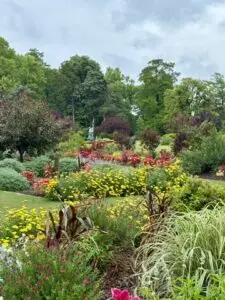
In our neighborhoods, we can actively support pollinators by being good stewards and planting flowering plants. Limiting the use of gas powered blowers in planting areas and leaving the fallen leaves will help the native bees, that actively nest in the ground. Avoid using garden spray services that treat the overall garden. Instead spray pesticides only on areas with active infestations of insects and try to use low toxicity or organic methods to control pests. This not only helps pollinators, it helps the overall ecosystem in the garden. Soapy water or Insecticidal Soap is helpful with many soft bodied insects i.e. spider mites, aphids and thrips.
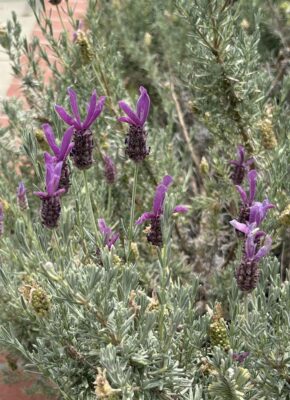
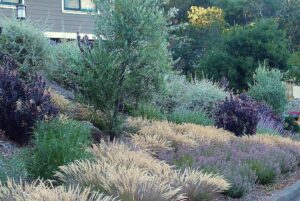
Lavender in the garden
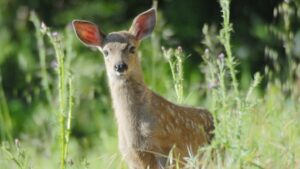
I have a good project for homeowners who want to help the bees. The planting of perennial herbs can be a great source of pollen for bees while also being useful plants for the cook in the family. Many herbs are very easy to grow and low water requiring. Some are used in landscaping regularly. Deer and Rabbits don’t particularly like herbs and often avoid them.
Some easy and useful herbs to grow are oregano, thyme, rosemary, lavender, and sage.
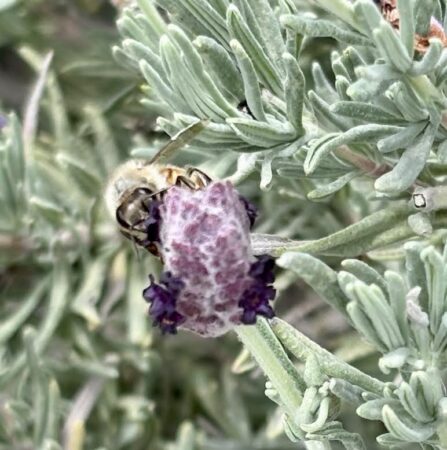

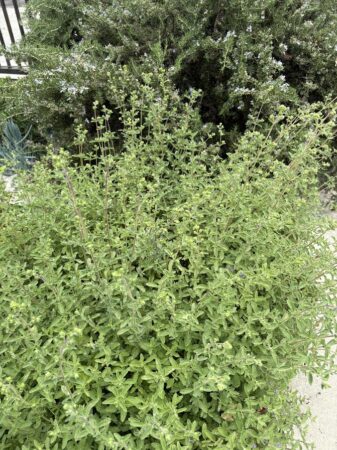
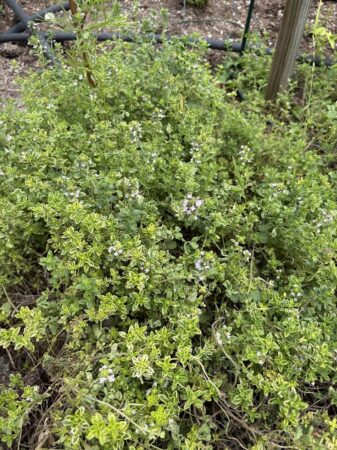
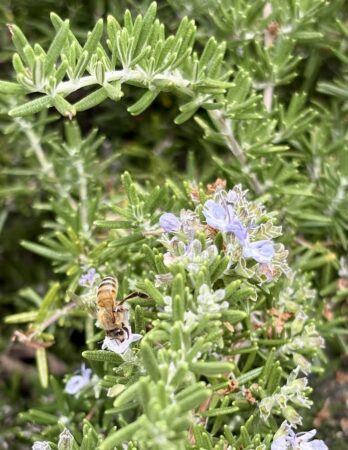
All of these herbs will last a long time in the garden. They grow fairly large, so allow a 3-4′ circle for each and trim back after the bloom cycle. Herbs can be dried in the microwave. I did a blog article about that. Here is a link:
Herbs are well adapted to many climates and soil conditions. They like sun and get leggy and thin in the shade. Herbs are great potted plants too. It may take a few years for the plants to develop a root system, but then they thrive. Water them once or twice a week in the dry season. The plants can be pruned back in late fall to reduce the overall size of the plants.
I hope you will try being a steward for bees. I listed herbs here, but tons of other plants and trees are good forage plants for bees and other pollinators. Worst forage areas for bees? Lawn. Unless it has a ton of clover in it, that is lower than the mower blade, lawn grass is not a plant that is a great source of pollen or interactive with the ecosystem. It is actually very exciting to see lawns being removed in favor of low water plants. Any plant that flowers and provides some cover for birds is much better than lawn, for helping insect and other wildlife.
Last comment. Be not afraid of Bees. They are so focused on retrieving pollen, that they would rather not interact or sting people. Teach children this too. We rely on bees, so letting them do their thing and gather pollen in our gardens is something we can do easily.
Do you need a good source of information on gardening in Deer Country? Check out my EBook on Deer and Rodent damage in the garden and how to stop struggling with them. I also have an extensive deer list of plants they avoid and sometimes Rabbits. Here is a link:
Thanks for reading the blog! I really hope the information is helpful and enjoyable for you.