Pioneer of the Prairie Style Landscape
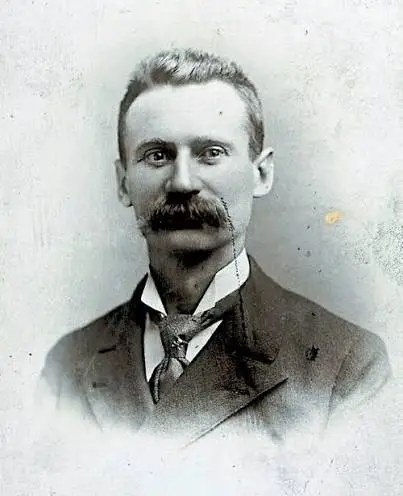
Photo of Jensen as a young man
First a bit of information on Jensen. He was born in 1890 in Dybbol, Denmark (annexed by Prussia during Jensen’s childhood). Son of a wealthy farming family, he spent his youth on the farm and then attended the Tune Agricultural School near Copenhagen. He was drafted into the Prussian Army and married when his military service was over. Wanting a new life, he immigrated to America in 1884. After a few jobs in different states he settled in Chicago, IL. What followed is the subject of this article.
A Lucky Coincidence
In my travels I happened run across two interesting sites that display landscapes inspired by Jens Jensen. He was a landscape architect who was active in designing American landscapes from 1910-1940. I was not that familiar with his work, but was very interested after running across a display at the Danish Museum in Elkhorn, Iowa and then seeing one of his homes in Chicago, Illinois.
Jensen wrote some short books about his philosophy i.e. Writings Inspired by Nature and Siftings. Intrigued by the information and landscape I had seen, I sought out his books and was able to check these titles out from the Los Angeles County Arboretum Botanical Library (first editions!) and read through his thoughts on the intersection of nature and planted gardens. He was way ahead of his time. Today, we strive to use more native plants and low water consuming landscapes. Ornamental and Native Grasses are on trend, and there is a movement towards the “messy” landscape with a more natural, native woodland or grassland look. Here was Jens Jensen, in the early 1900’s, taking ideas from the natural landscape and using them in landscapes for the parks in Chicago, and other cities, plus the private estates of the Henry Ford Family. I guess America wasn’t ready for the prairie landscape then, but in the face of massive water shortages and the high cost of treated water, we are finally turning the corner and are accepting a new kind of landscape.
For Jensen, what first began his journey into a naturalistic landscape was a failed attempt to use exotic plants in a park in Chicago. He realized he needed plants sturdy enough to handle the local climate and turned to the areas native plants for substitutes for tender ornamental plants. His fondness for woodlands, grasslands and riparian environments solidified his intentions and led to the development of the prairie landscape. An American invention to supplant the European style gardens, much in use in early gardens of the U.S.
Recently, I happened to read a book about the design of High Line Park in New York City incorporating native plants, grasses and naturalistic design, all done in a style that personifies Jens Jensen’s work. It was surprising that the authors and designers did not mention or credit Jensen- the man who spearheaded this type of landscape design. What he termed the Prairie Landscape. Along with Native Plant societies and groups in favor of having gardens that are welcoming to wildlife and insects, Native plant Gardens have long been a poor cousin in garden design in the United States. Thankfully, the tide is changing and environmentally friendly landscape design is finally coming into its own.


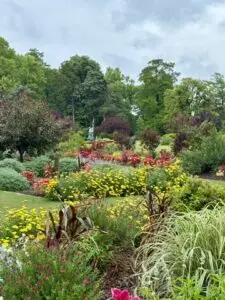
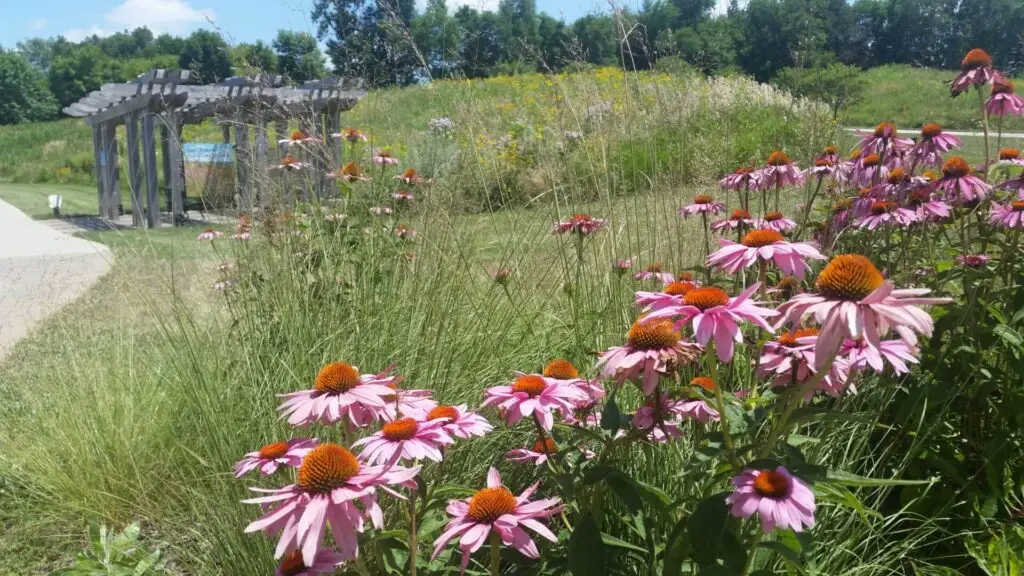
These landscapes are beautiful and full of color. Tawny grasses combined with bright greens of rushes and sedges making great waves of undulating leaf blades as the wind sweeps through. The grasses change from season to season and this is truly an ecologically based type of garden. Wildflowers and flowers from native bulbs add more color with the changing seasons. Jensen was very fond of incorporating native trees and shrubs as backdrops, to frame views or hide them, and to provide surprising reveals as you move through the landscape.
It was on one of my long driving trips, I happened to stop in Elkhorn, Iowa to visit the Danish Museum (and in hopes of finding some yummy Danish Pastries). The Danish Museum has a beautiful open beamed ceiling with high windows that let the light in, and displays that highlight the life of immigrants from Denmark living in America through the years. The subject matter is varied, but farm life and products are top of the list. You can feel the love of the Danish-American Community here, with so many contributions from families and businesses, the museum feels very warm and friendly.
It was outside the museum that I came across an area dedicated to the life and work of Jens Jensen. Large picture boards and text shows the background and career of this dedicated man. His first jobs in the United States were menial, but he soon became involved with the park system in Chicago, rising quickly to supervisory positions, which included planning and implementing sections of some of the parks. He went on to become a landscape architect and formed his own practice. He was prolific in his work, designing park areas and zoos, estates and working with many famous architects in different areas of the Midwest.
Here are a few photos of the Museum and the outdoor display area including shots of the surrounding farmland and natural creek area. I visited in September so the areas are a bit dry but the feel of the natural landscape comes through.


I really loved driving across the U.S. in early Autumn on Interstate Highway 80, the fields and trees showing fall colors and the agricultural lands rolling out to the horizon. It is easy to imagine the plod of the prairie schooners (covered wagons) rolling along at a slow pace through the prairies with birds calling and diving into the grasses to feed on the seeds of the mature grass heads. I even saw some Pronghorn Sheep!
Jensen arrived in the U.S. before the native prairies were plowed under, highways cut through the landscape and cities sprawled into suburbs. He had the advantage of enjoying the unbroken vastness of the wilderness in the heart of the country. The sea of grass that stretched for hundreds of miles. Voices like his encouraged Americans to visit the wilderness and embrace what they saw as the real beauty of the country.
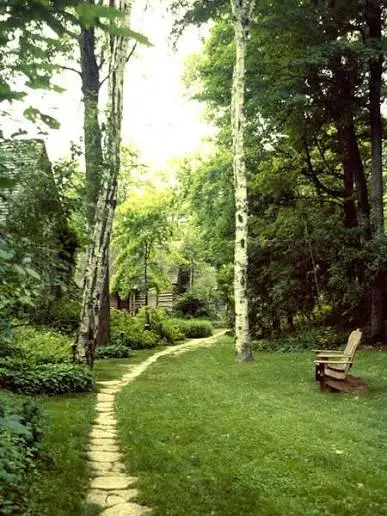
For much of his career, Jensen lived in the Highland Park area of Chicago near Glencoe on the shores of the Lake Michigan (now Lighthouse Park). I happened to be exploring the area, while on a trip, and stopped to see his home site and small nursery area. Here are a few photos.


The grounds do have certain wild quality! And the greenhouse is not active, but it was quite wonderful to see the property, lovely old trees and extra large shrubs. That it has been preserved and kept as a park and open space area, speaks to the popularity and respect that the city has for Jens Jensen.
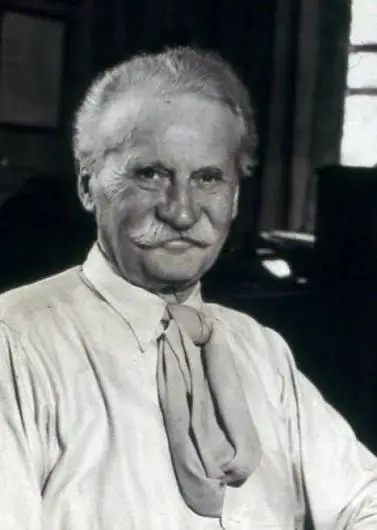
Pictured here is his portrait in his later years.
Today the area of his home is an affluent, upscale enclave with some very large mansions. Having worked in some upscale neighborhoods in the San Francisco Bay Area, I thought I was familiar with ritzy neighborhoods, but these grand homes blew me away. And that’s exactly what a budding landscape architect would need to get his practice off the ground. Wealthy landowners are the bread and butter of talented architects and landscape architects. He had a good reputation from working in the areas parks, which also showcased his work. Very savvy. Probably more like luck, but nonetheless Jensen got off to a great start and his talent took him the rest of the way.
After his wife passed away, Jensen moved to Door County, Wisconsin in 1935. He had vacationed there for many years and loved the area. He started the Clearing, a folk school on his property with the aim of immersing visitors and students in nature for spiritual renewal. His philosophy of working with nature and enjoying the outdoor world continue at the school to the present. They offer short courses with the theme of enjoying nature, folk arts and craft, philosophy and some fine arts.
Jensen passed away in 1951 at the age of 91 in Ellison Bay, Wisconsin. His legacy spins a fine web through the history of landscape design in America. A pioneer who is often forgotten, but is still respected and loved by those who are familiar with his work and philosophy. He called the Clearing School – the School of the Soil, indicating the intention of the courses being offered to be tied to nature, and what has come from the earth. He was a person that revered natural environments and sought to introduce them to those who visited his gardens and landscapes. And later to the students at the Clearing.
I hope you find this article interesting – and Jens Jensen. Yes, he has a funny name and appears somewhat Mark Twain like, but like Twain he is an American original who cast a cleverness and brightness to the American scene. I wish I could have met him- that would have been a great gift.