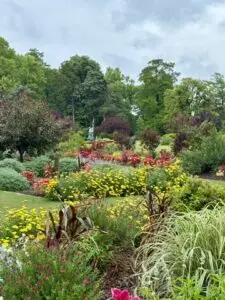
Combining Colors in the Garden
Part Two- Pastels
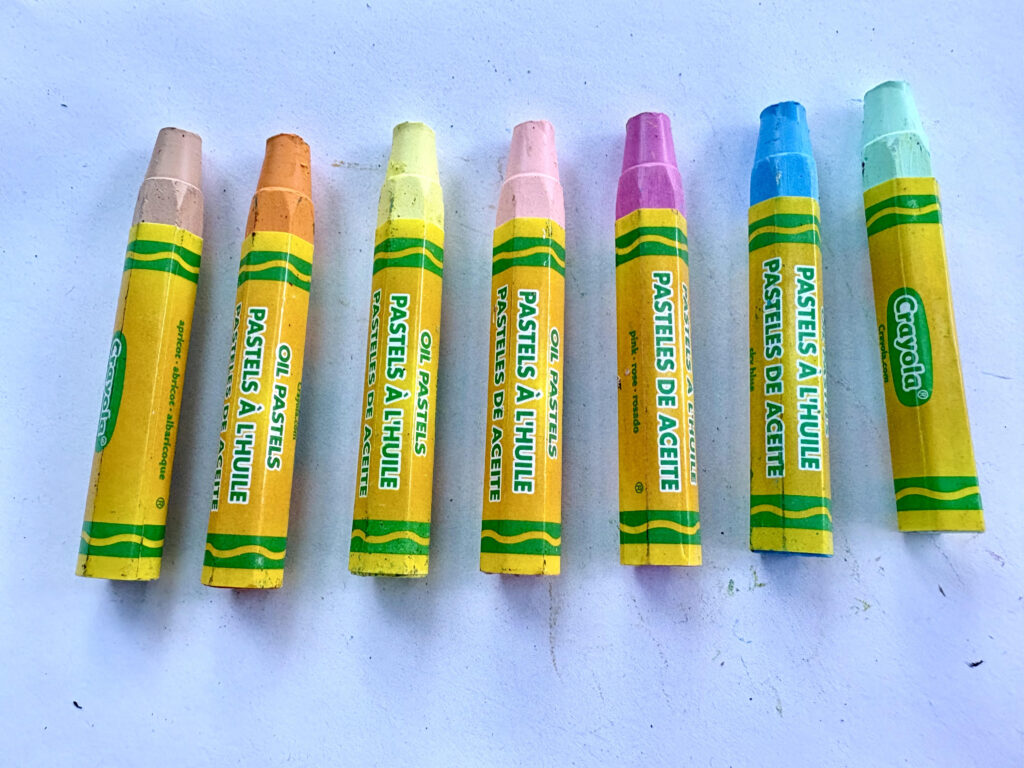
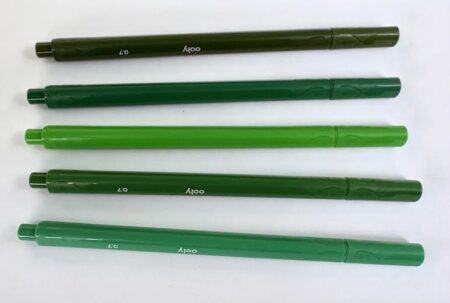
Continuing the discussion of color and combining colors in the garden, another color group are the pastels. Shown above are a few artists pastels in pastel colors- ha!
Pastels are soft colors that are primary or secondary colors combined with white making the muted colors.
Often seen in English Country Flower Borders and in Wedding Arrangements and Decorating.
Impressionist paintings also spring to mind with their diffuse light and merging colors. Monet’s Waterlilies, Degas’ Ballet Dancers, Cezanne’s Landscapes with their soft, watery colors and romantic settings.
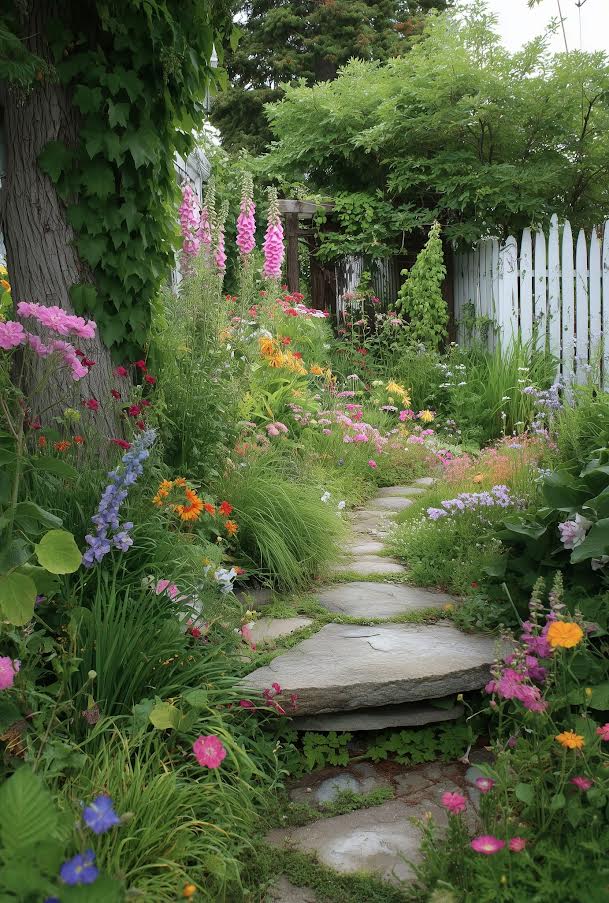
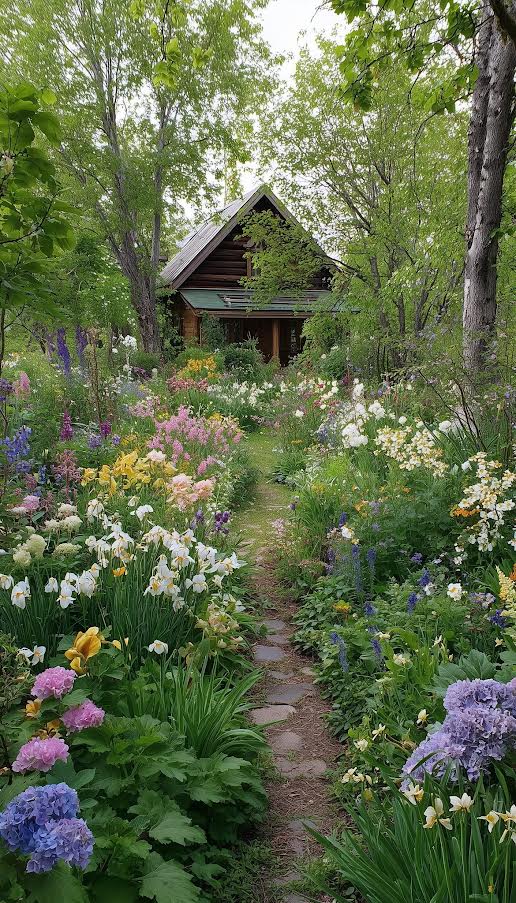
It’s funny that I was looking through my Face Book pages and found these two gorgeous examples of flower gardens with pastel colors of flowers- just as I was writing this post! The Garden Lovers Face Book page had these dreamy scenes. If you get your garden to bloom this much, you get a prize!
Some of the best flowering plants for pastel flower borders are shown; Hydrangeas, Foxglove, Iris, Delphinium, Daffodils and Astilbe among many more.
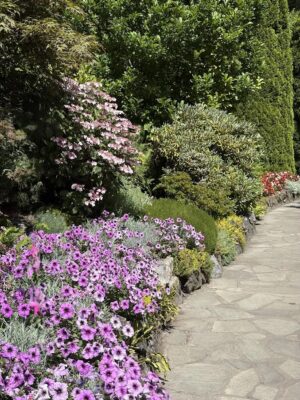
The Pastel Palette
Lets look at a pastel color chart using flowers- boy, is this fun!
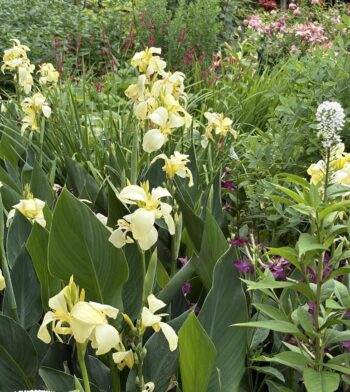
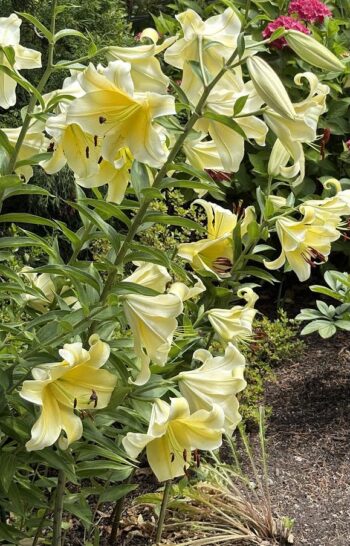
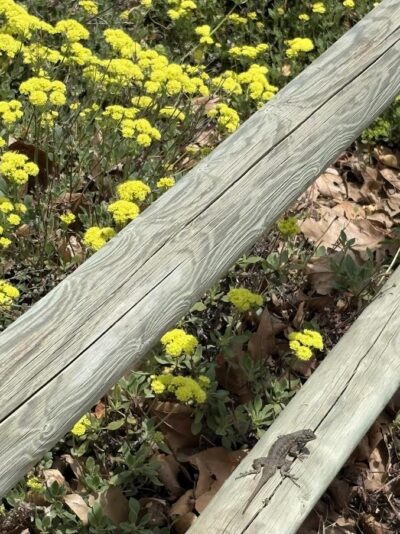
Pale Yellow Canna Lilies, Asiatic Lilies and Eriogonum-Sulphur Buckwheat in light yellow colors
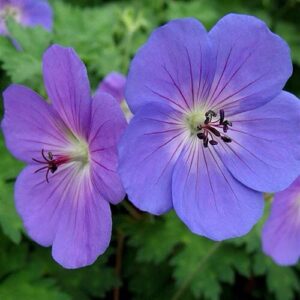
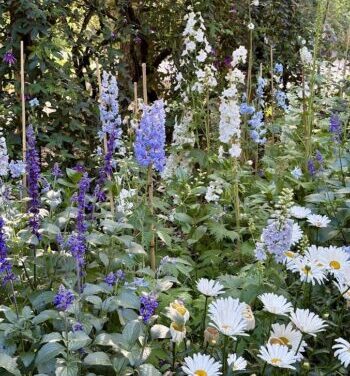
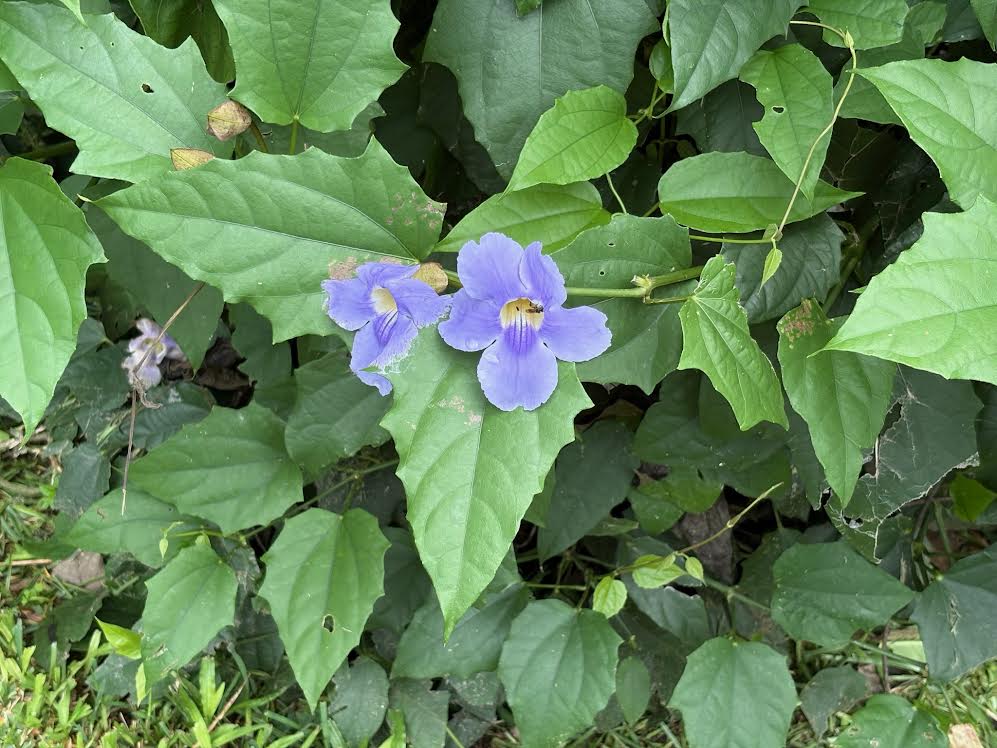
Geranium ‘Johnson’s Blue’- Cranesbill, Delphinium and Thunbergia grandiflora all in pastel blue colors and white.
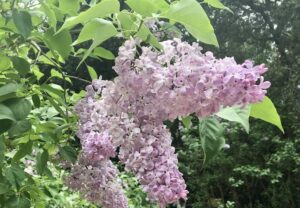
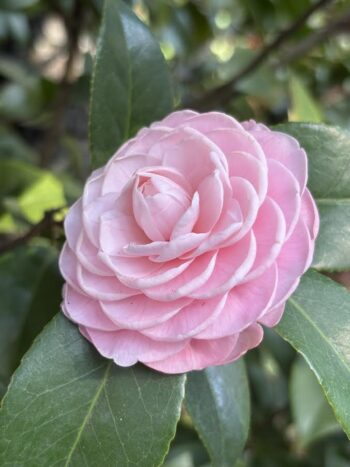
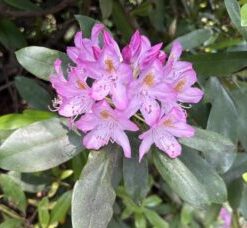
Lilacs, Camellia and Rhododendron in pale pink colors
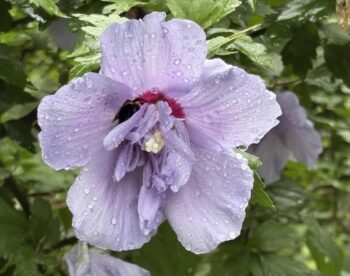
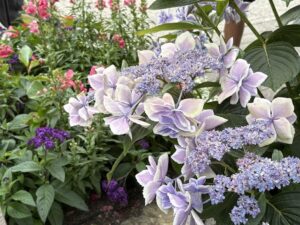
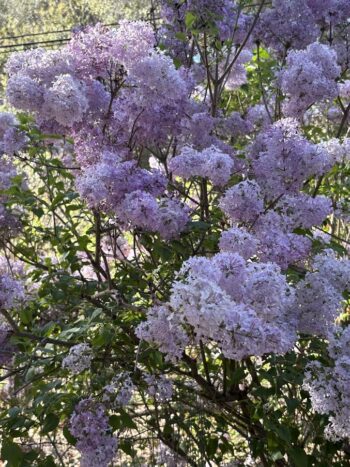
Hibiscus syriacus- Rose off Sharon, Hydrangea ‘doubledelights stargazer’, and Lilac all in lavender tones
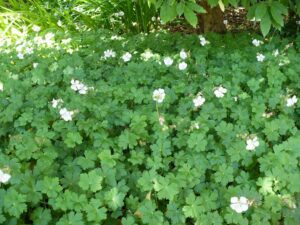
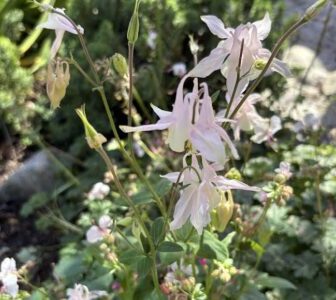
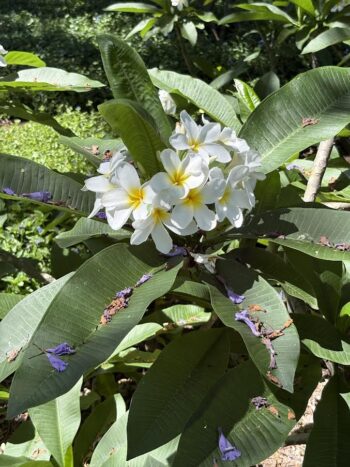
Geranium ‘kashmir’, Columbine, and Plumeria all in white
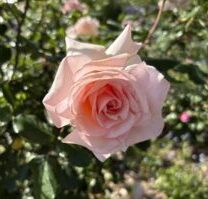
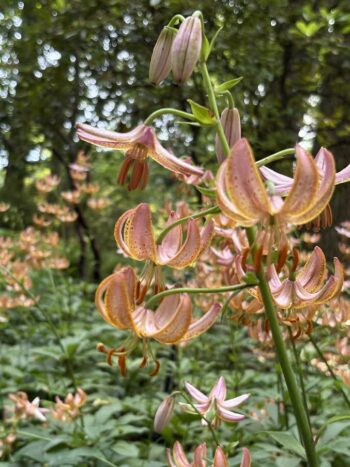
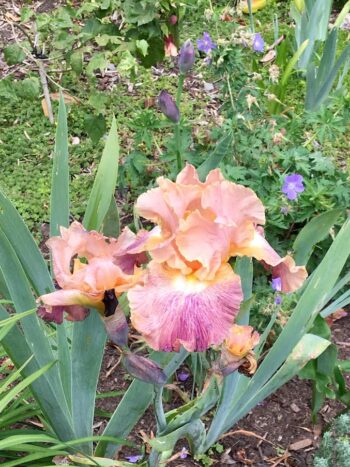
‘Peach Sara Spray’ Rose, Martagon Lily, German Bearded Iris in light peach colors
Pastel colors tend to be soothing and evoke romance. A garden with pastel colored flowers, abundant with green leaves and trees, that only cast light shade, invites relaxation and contemplation.
As you scroll through the pictures in these blogs about color, you really notice the themes. Saturated Color vs. Pastels, Hot Colors vs. Cool Colors. Think about which colors appeal to you and how they combine with other colors.
Shades of Green
Visiting the Mason Hollow Hosta Nursery in Massachusetts, where varied shades of green rules supreme, I admired the long rows of hybrids in every possible hue of green.
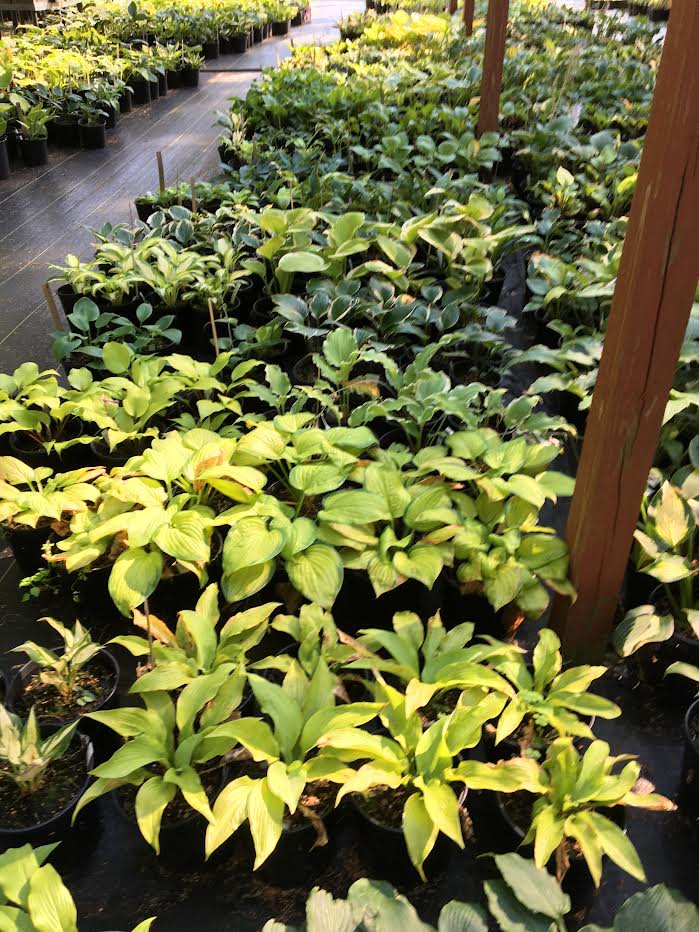
From Blue Green to Chartreuse these foliage plants have been a shade garden staple for many years, and a whole garden border can be planned with just Hosta as the ground level planting. They do bloom too in white or lavender.
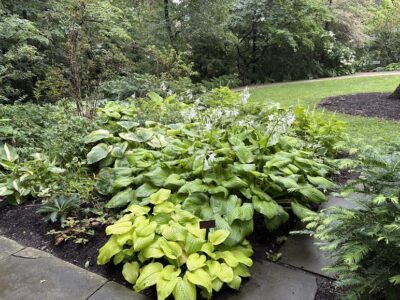
Wandering the path areas in Botanical Gardens is a great way to see a huge cross section of shades of green. This is my lucky life now! Exploring gardens and sharing my pictures on the blog.
Here are a few more examples of varied shades of green.
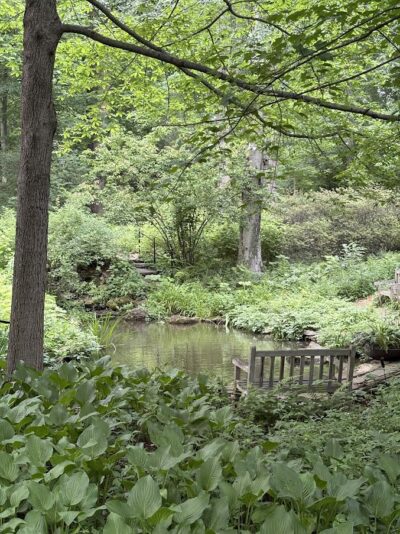
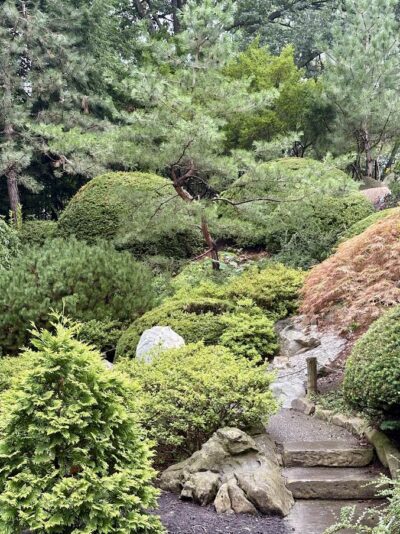
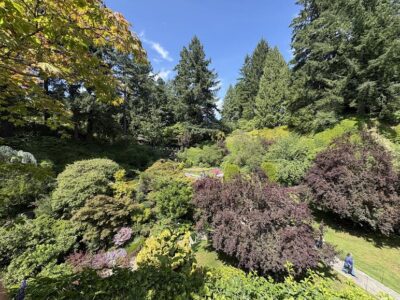
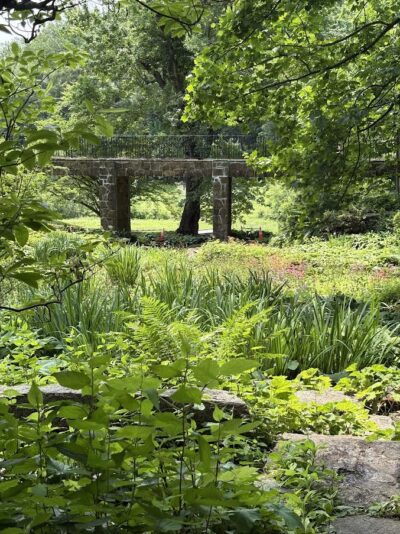
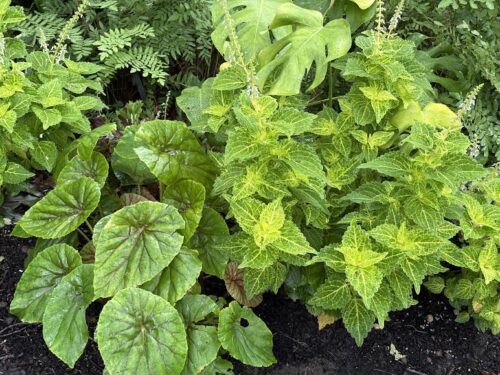
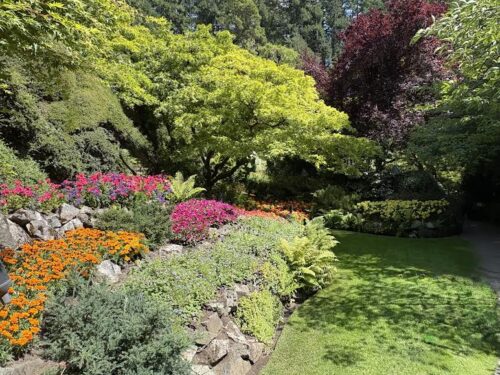
Green, as we discussed, is a combination of blue and yellow, it combines both warm and cool colors. I think this why green makes such a perfect leaf color. It compliments a wide range of other colors.
A Japanese Garden uses predominantly shades of green with just a few color spots of red maples or blooming azaleas. The concept of the gardens is be a microcosm of a large forest or aquatic landscape. I saw a Japanese Garden recently that represented a harbor community with small bamboo and tile roofed buildings next to a pier going out into a lake.
Lawn in the garden represents the meadow. It’s an open area surrounded by planted areas or forested areas. Large areas with a mix of plants can be busy or chaotic to the eye. The lawn gives a clean, even surface that is easy on the eye and helps to bring the whole garden together. Of course, it acts as a play area, path and lounging area too. It is too bad it is so labor intensive and water guzzling but, in many parts of the country the summer rains help out with the watering at least.
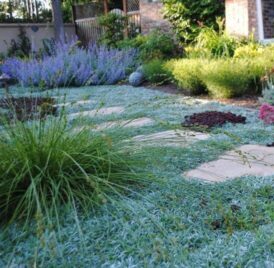
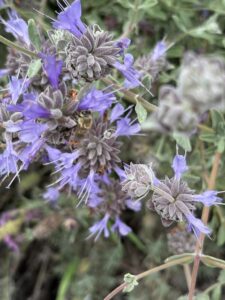
Silver or gray-green leaves are common both in hybrids and in drought tolerant gardens. Silver leaves reflect the sun and are often covered with hair which is the plants adaptation to drought and conserving water. The leaves are small or tiny, thereby having less surface area to loose moisture. Southwest and the West, where there are drought summers, host many plants with silver or gray-green foliage i.e. lavender, sage, Russian sage (seen above in the background), artemisia etc….Most with purple or blue flowers which blend well with the leaves. Peach and orange color paving contrast well with these colors.
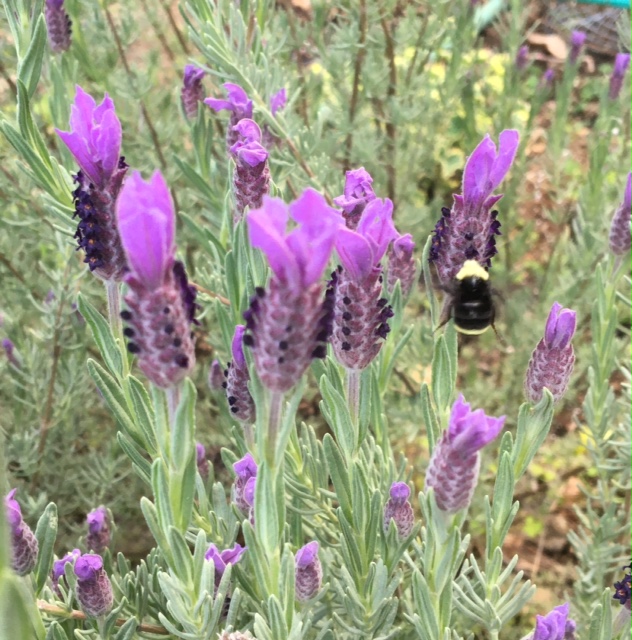
The oils in lavender also help to keep the leaves from drying out in excessive heat.
The next blog will continue the discussion of color in the garden and cover warm and cool colors. At the end of the series I will go over how you can use all of these concepts in your own home and garden.
Take a trip to some of the many Botanical Gardens pictured in my blog by joining my monthly Travelogue. Click the button above to see a description and sign-up. The Travelogue also makes an easy, low cost and eco-friendly gift.